Monday, July 29, 2019

What Goes Around, Comes Around


  The way immigrants, children, — babies! — are being treated in inhumane camps at the border of my country, in the heartland where they are afraid to come out of their homes lest they be snatched from their families — breaks my heart. 

  The Writer and I did not expect to be attending vigils and singing protest songs we sang in our teens again in our old age.
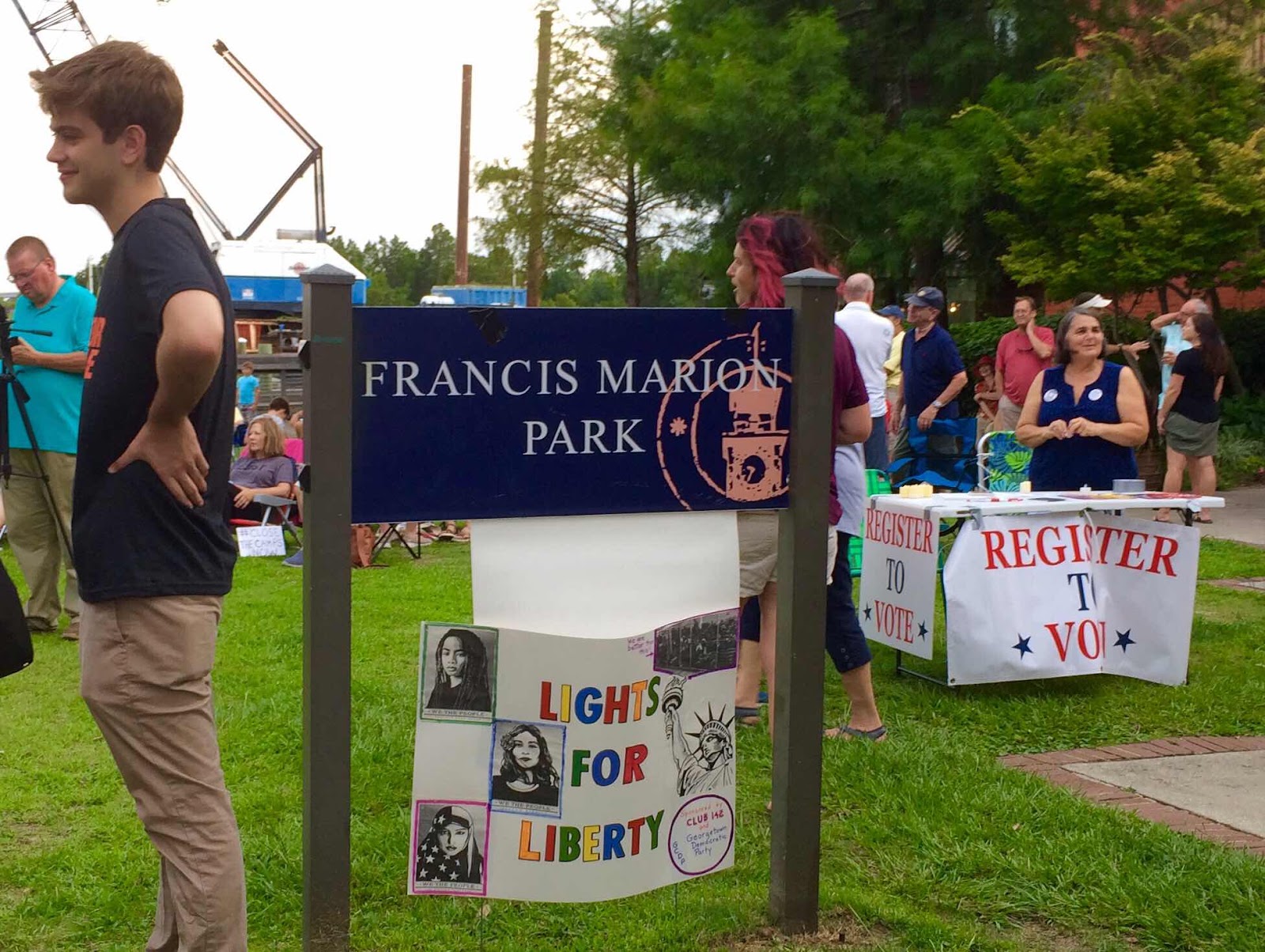


  Earlier this month communities across the country announced candlelight vigils to show support for more humane treatment for asylum seekers from Latin America.  


  Georgetown (pop. 9000) is not a diverse community at all and for the most part doesn’t have much enthusiasm for outsiders (including those of us from north of the Mason Dixon Line!).  We wondered if we would be the only ones showing up in the park.  We were pleasantly surprised.  


  There were handmade signs ...


and speakers (including a Native American elder, a worried honor student - DACA recipient, a war refugee from Germany in the 1940s, a passionate and eloquent young Gullah woman (above), descendant of African immigrants who were forced into slavery),


and musicians to lead us in songs for which some of us did not need the song sheets to remember all the words. 


When is the last time you sang all the verses of This Land is Your Land, Blowin’ in the Wind or If I Had a Hammer?  For us ... oh, nearly 50 years!  


Finally, we lit candles as the darkness fell on the beautiful harbor behind us and stood together to sing a last song of love and compassion for those frightened, tired, hungry, dirty and hopeful human beings in the camps.
Someone's crying Lord, kumbaya
Oh Lord, kumbaya*

*  Sung in the Gullah culture of  South Carolina and Georgia, with ties to enslaved West Africans. The song is thought to have spread from the islands to other Southern states and the North, as well as other places in the world. 


Saturday, July 13, 2019

Gallivants Ferry on the Little Peedee


  Minnesota might have 10,000 lakes but I’m pretty sure more of the surface of South Carolina is covered with water than Minnesota’s is.  From the coast west, the land is covered with rivers and swamps that limit travel, isolating farms and communities.  Nowadays we zip over causeways and bridges to get from here to there, but those who were here in the 1700s and 1800s had to deal with the water at ground level.  
  Ferries were the only way to go.
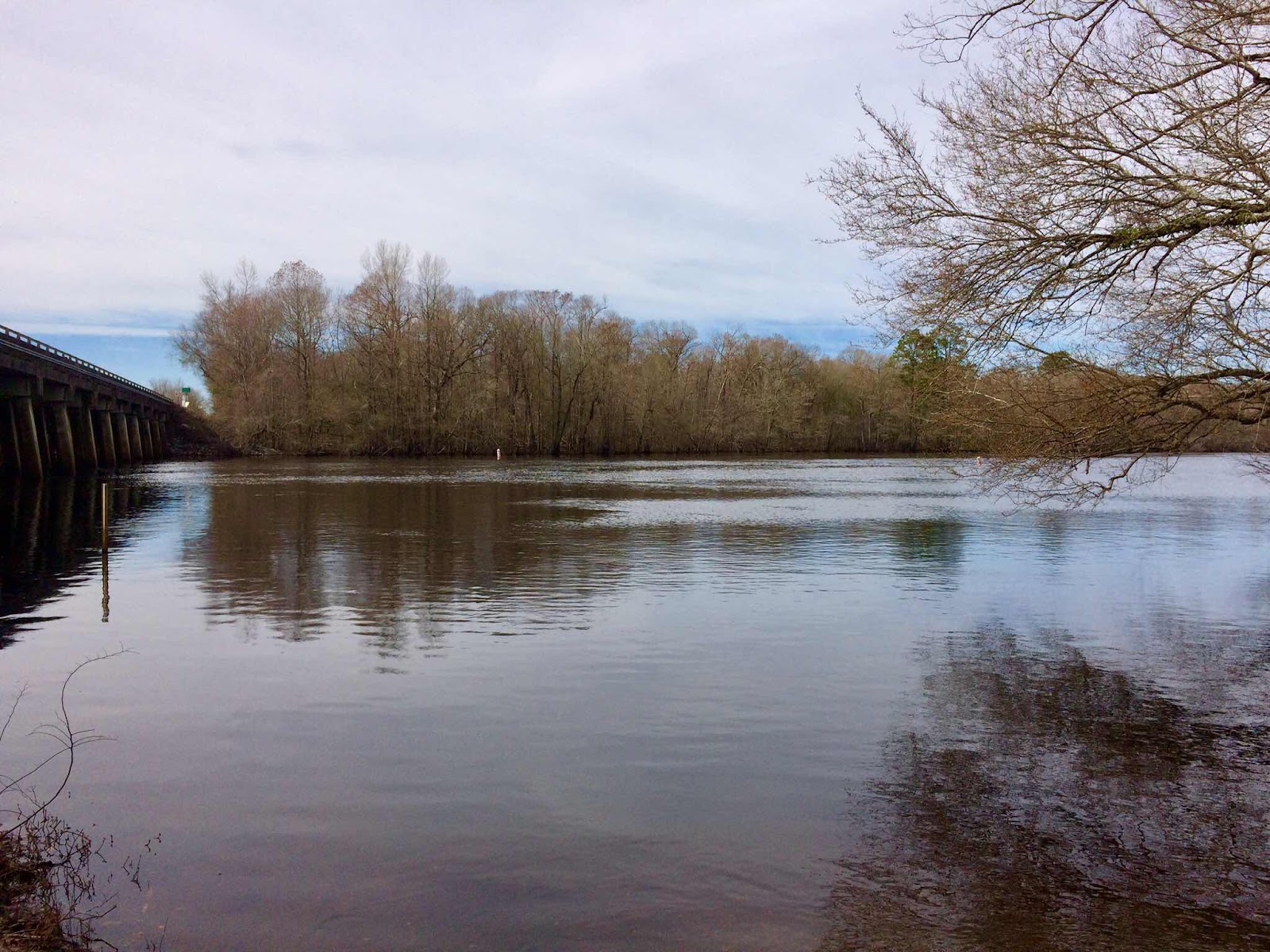
The Little Pee Dee River at Gallivants Ferry

  The first ferries were simple flat-bottomed rafts or even canoes powered by paddles, 
oars, or poles.  Poorly constructed, manned by those of questionable skill, they commanded expensive tolls.  After all, what choice did a traveler have?


  Over the years, larger flatboats capable of ferrying a carriage, wagon, or freight came into use, and a pulley or winch system was used to move the boat against the current (photo below).  Costs rose accordingly, and in 1805 the toll for a carriage or team and wagon was $1.00 and a man and a horse 12.5 cents.  

 Cooper River ferry. (University of South Carolina collection).


Catawba River SC (photo from American Civil War Forum)


  Over time the location of a river crossing became a logical place to build a store ... a house ... an inn, and soon there would be a town, often named for the owner of the ferry business.  

  One of those places is Gallivants Ferry, west of Aynor on Hwy 501. A Mr Gallevans was granted the license to run the ferry there in 1795.  A store followed and the crossing became known by his name — sort of, as Gallevans apparently became Gallivants at some point.


  The store is still there today, as are other buildings that used to make up a community.  Happily, every building left today is preserved on the National Register of Historic Places.  


  When the cotton industry was demolished by the boll weevil, area farmers turned to tobacco for a cash crop. The variety grown here was “flue-cured tobacco,” which required a heating process in the barn before being sent to market.   The Pack House (left) was used to grade the cured tobacco and store it until it was taken to auction.


  Tobacco barns in the field were made of pine logs and equipped with brick furnaces to cure the tobacco.  Someone had to be at the barn around the clock to tend the wood furnace and control the temperature for a period of three days up to 10 weeks.  

  Behind this large storage barn a small village of 3-room sharecroppers’ cabins still stands.  In the 1930s and ‘40s, 1200 to 1500 men, women, and children were part of the sharecropping workforce in this area.  When the tobacco was sold, they received half the profits for their work.


  Powered by mules, the grist mill employed granite rollers to crush grain to produce flour, meal and grits to feed the community and livestock. The miller kept a portion of the meal as payment for the service.

  There are quite a few more historic buildings to see in Gallivants Ferry, some of them still in private use.  

  It is an unusual historic site to visit as there are no commercial shops whatsoever selling stuff, no people around, no traffic, no explanatory signs.  You are happily left to explore with only the quiet flow of the river and your imagination to conjure up the stories the place has to tell. 


Wednesday, July 3, 2019

What’s Your Impossible Dream??

“Purl’s Yarn Emporium”, Wall Street, Asheville, NC


  Simple sock monkeys made of men’s red-heeled work socks were popular when I was little.  Everybody had a grandma who made them.  But look closely at the details of these. This window display takes sock monkeys to a whole new level!  
  
I had no idea such a humble toy would be controversial, but get this:  

  In 1953, Helen Cooke received the patent for sock monkeys and then sued a man named Stanley Levy because he was selling sock monkeys that were not the same design as hers.  He contacted the Nelson Knitting Company hoping that they would declare her patent invalid. One of the most important pieces of evidence the company uncovered was a doll made by a lady named Grace Wingent for her grandson in 1951. Helen caved and settled the case against Levy when she was shown the evidence against her.  She sold her sock monkey patent to the Nelson Knitting Company for $750.

“The Impossible Dream” from “Man of LaMancha”


Saturday, June 29, 2019

Flat Stanley? ... Flat Granny!


  Flat Stanley was a popular children’s book series about a boy who gets squashed flat by a falling bulletin board.  Making the best of the situation, Stanley discovers he can now do cool things like slip right under a closed door and  his distraught parents put him in an envelope and mail him to California.  Thus begin Stanley’s travels around the world.  

  The books inspired a Canadian teacher to create a project where his students mailed a cutout of their own Flat Stanley, along with a story they made up about him, to a classroom in another state.  The recipient was to take a photo of Stanley somewhere in his or her town and include information about what Stanley did or saw while he was there and mail Stanley back.  When the Stanleys came back to the original school, the photos and letters were displayed, then the students sent them out again on another journey. 


Over the years the Stanley projects proved a fun way for students to learn geography and experience the wonders of the world.  
By 2011 the project included thousands of classes in 88 countries participating annually, including the schools I taught in!  

So, that’s Flat Stanley, there, riding an elephant in India. 

 Now, who is Flat Granny?


  Flat Granny is part of an art exhibit called Suspending Belief at the Jones-Carter Gallery in Lake City, SC.  We loved it!  

Jenny Fine grew up enjoying and photographing all kinds of adventures with her slightly eccentric Alabama grandmother.  Together they dressed up and acted out little dramas for photographs.   


After Granny’s death, there were many stories Granny told Jenny that she hadn’t photographed yet and Jenny missed the adventures they might have had had she lived on. That’s how she came up with the Flat Granny idea.  Constructing a larger-than-life-size head and hands from a photograph, Jenny used them to recreate Granny to photograph her as she had when she was alive.  


Life-size Grannies in the gallery suspended from the ceiling floated and twirled.


Daddy and Flat Granny Dancing in the backyard watermelon patch.  


Feeding Flat Granny


  My phone battery died so that was all the photos I  took, but you get the idea.  


  Jenny Fine’s Granny must have been a whole lot of fun and an amazing good sport.  Definitely someone fun to know!  

Saturday, June 22, 2019

Guess Where I Am

A couple hints ...


  They were babies, maybe six inches long not including the tail, and absolutely fearless.  

  I think I could have picked one up ... if I wanted to!  


Ibis, in the hospital parking lot.  

  Did you guess Florida?  If you did, you are right.  My mom had cancer surgery and I am here to help.


 Mom is 92 years old and she did great.  They discharged her from the hospital less than 24 hours after surgery.  As you can see, she was ready and waiting to go home!  

   She has a drain that has to be emptied — my job and I was very nervous. I’m getting used to it though.  We’re doing fine now at home with only a visiting nurse.  We both have a good supply of books to read and if we can figure out the Roku thing she got for Christmas, we can watch some movies.  


Have a good weekend!

Saturday, June 15, 2019

Alllll Aboard! We’re Out to Lunch!

Remember these?

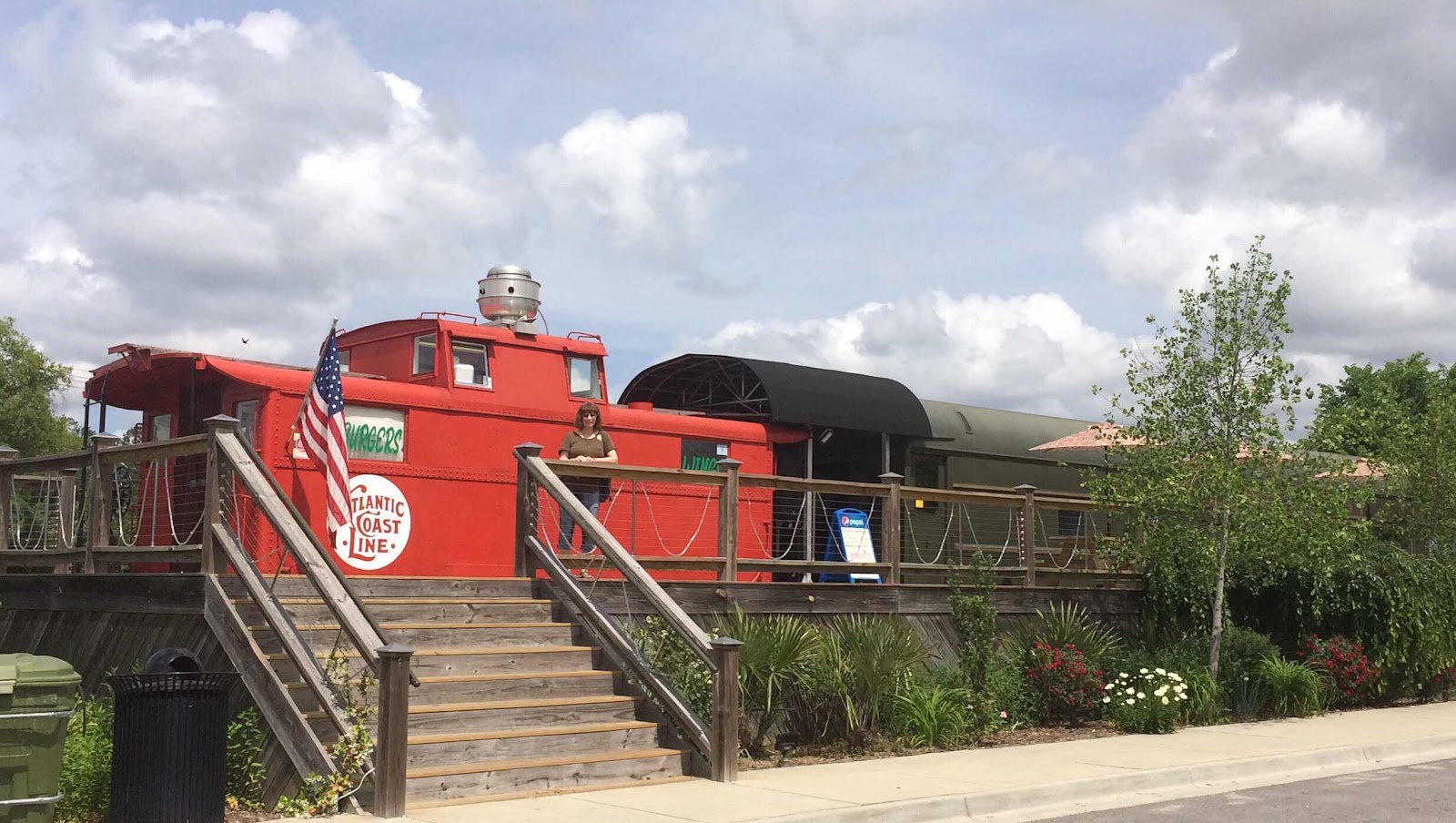
This one doesn’t go anywhere anymore, just sits in the station in Lake City, lookin’ pretty.

But you can still go inside and ...


order up lunch! 
If you use your imagination, you can pretend you’re traveling in the ‘50s and the train is moving slowly through town while you enjoy your dining car lunch. 
🧳 🧳 🧳
  
  It’s been a quiet week here in Georgetown, several days and inches of rain, followed by record cool weather, which I love.  
  On Thursday I noticed an injured young cardinal in the yard.  He was under the bird feeder trying to hop about so his mama could feed him and couldn’t remain upright, so pathetic to watch.  We knew of emergency clinics for all kinds of sea animals, including the famous one for turtles and even one for raptors near Charleston, but hadn’t heard of any place that took in songbirds.  We did eventually find a place about an hour away.  
  When we went outside to get the bird he surprised us by awkwardly flying into the azalea bushes and we couldn’t find him.  A couple hours later he was back flopping around under the feeder.  We were smarter, and we got him.  The Ark Animal Hospital in Surfside Beach assured us that they would try to fix him and humanely euthanize him if they couldn’t so we left him, along with a donation and a little blessing with hopes that someday he will fly free and strong.

  One more baby bird story.  This morning we were at a stoplight and noticed a parade of Canada geese, Mama, Papa, and a whole waddle of little ones out in front of them and all around them, on a mission to cross a road.  Then behind the Canada goose family came three very large white, honking domestic geese.   And behind them, four half grown mallard ducklings!  Maybe something had happened to the duckling parents and they had imprinted on the goose family?  Anyway, we changed our direction and followed them to make sure everyone made it to the canal across the road, which they did.  


Hope you are en-JOY-ing your weekend!  
 

Wednesday, June 12, 2019

A Bridge Covered With Flowers

We were in North Carolina last week and took the scenic route home through narrow mountain roads.  In Lake Lure we happened upon something interesting — an abandoned highway bridge over the Broad River beautifully landscaped with flowers!  It was raining, but we stopped anyway.


The plantings are all designed, planted, and cared for by volunteers.  Some sun would have made nicer photos but we didn’t mind getting a bit wet for such a pretty walk.