Saturday, August 31, 2019

St Paul’s Old Municipal Grain Elevator

 
(This is a continuation of my last post about the Upper Landing Park in St Paul, Minnesota.)

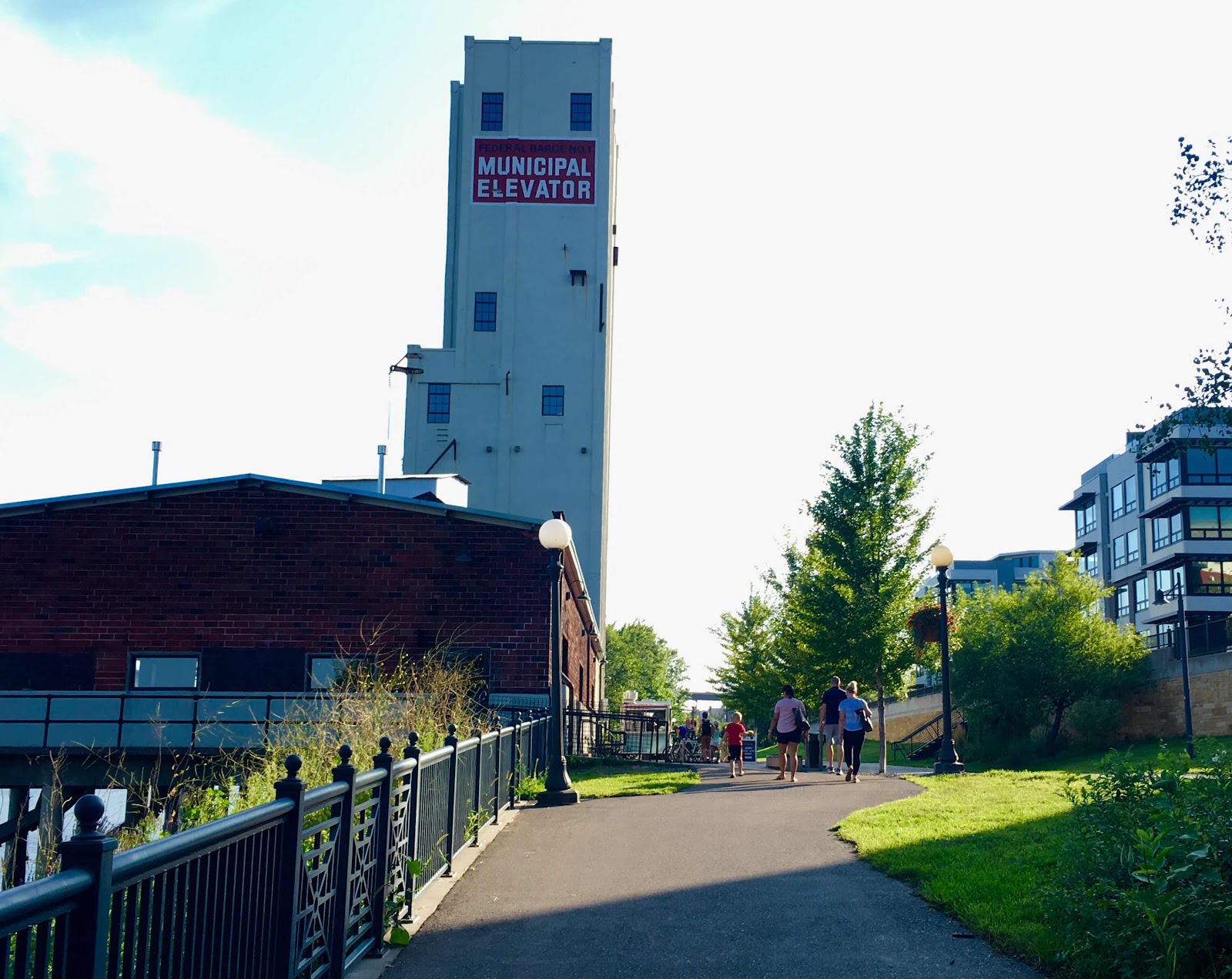
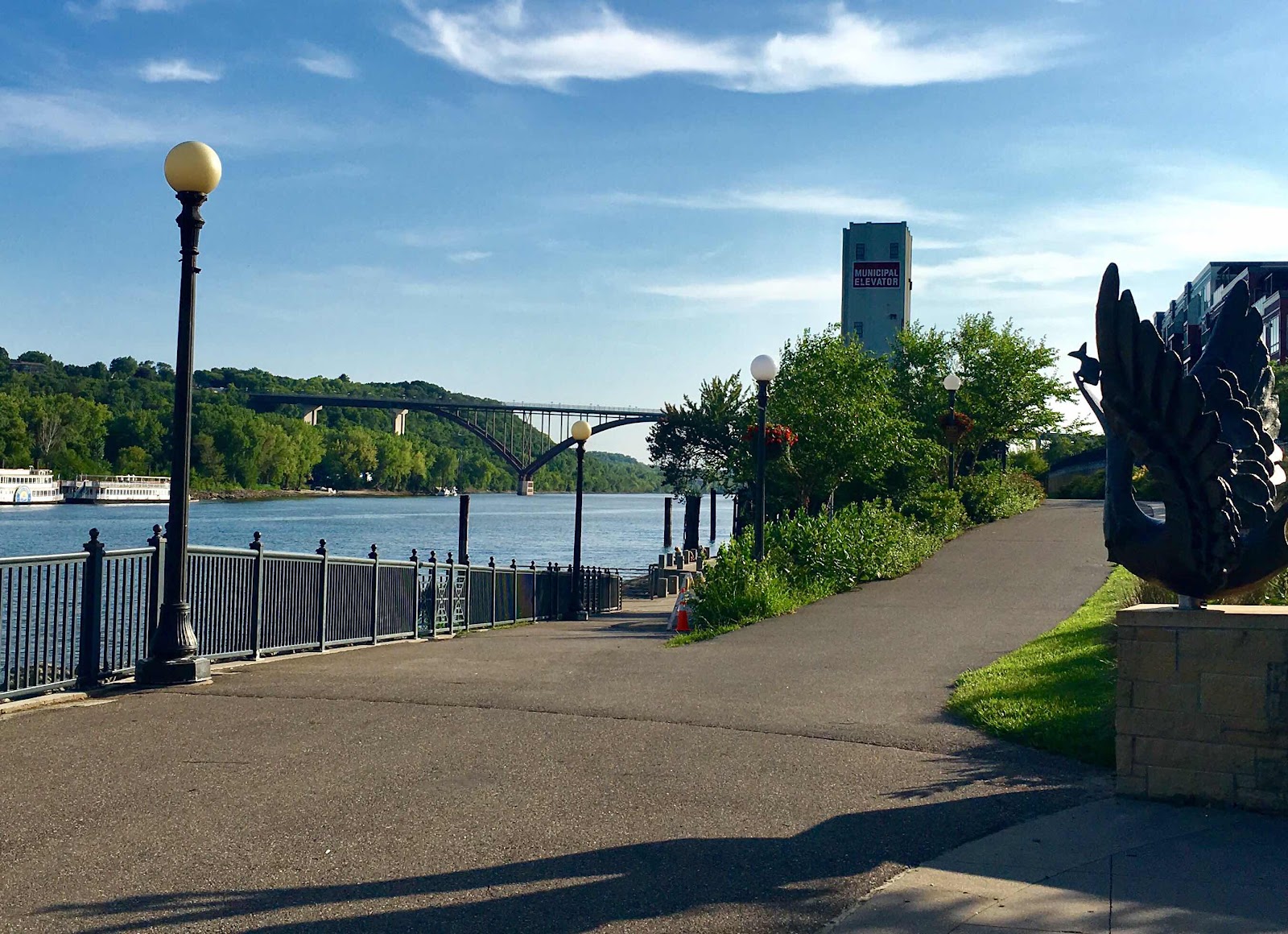
  From Upper Landing Park you see the tower of the old Municipal Grain Elevator down the river.  


  We walked up the hill for dinner and another little lesson in St Paul history. 


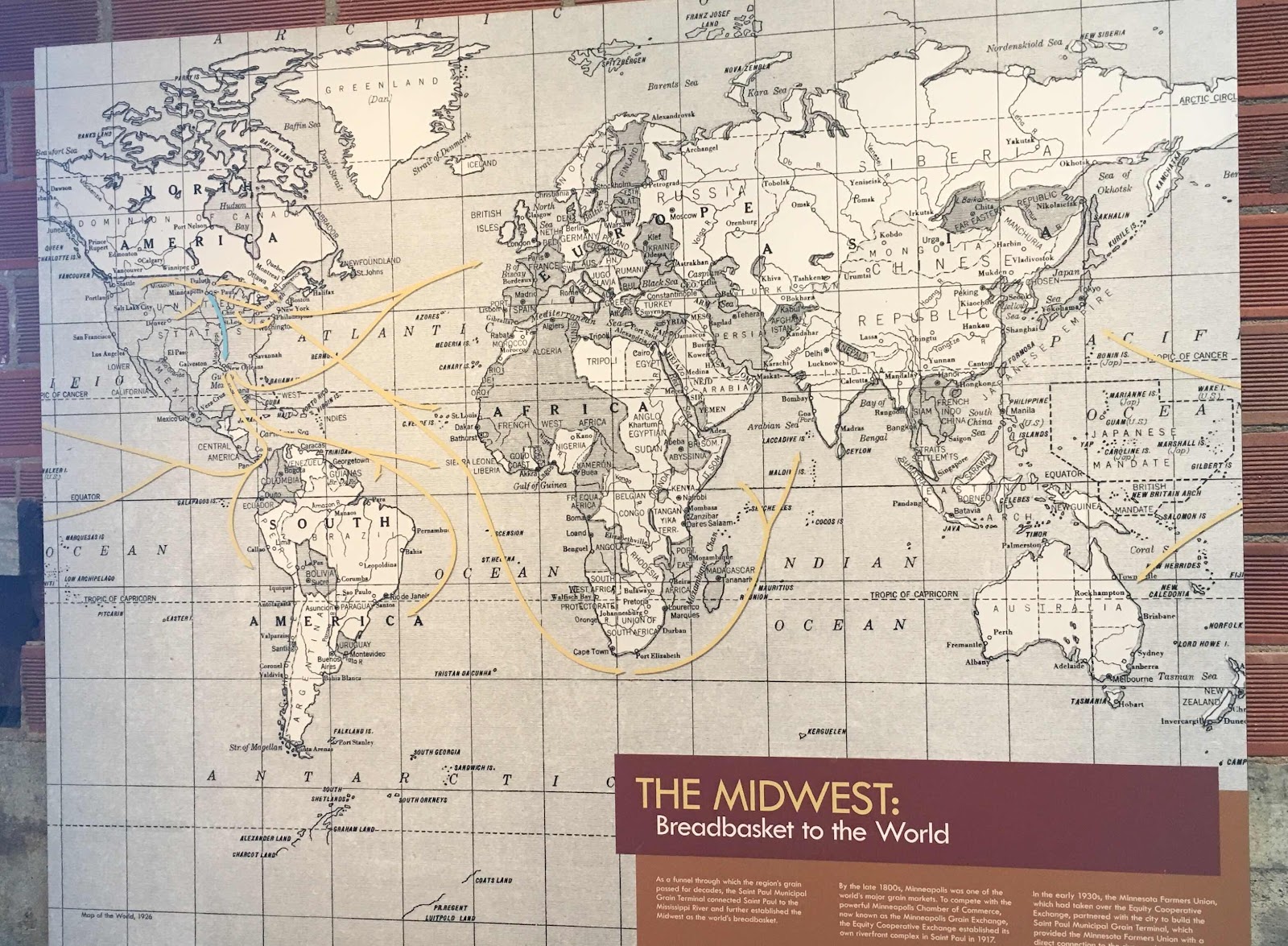
  By the 1930s the grain industry was flourishing on the river, and now the six-story Municipal Grain Elevator and sack house are all that is left of it.  For almost 60 years, through the 1980s, the riverfront was bustling with trains arriving from the Dakotas, Montana, and western Minnesota to unload wheat, flax, and rye, making the Midwest the  “Breadbasket to the World”.
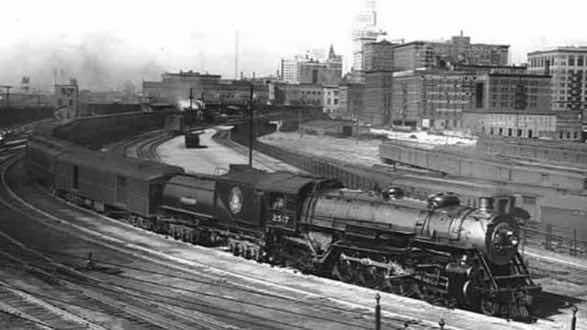
  From the boxcars, grain was shoveled into either the sackhouse (below) where it was bagged or the elevator, then moved into the barges that lined the riverbank ready to transport it down the river. Some of the wheat also went by conveyors to a flour mill next door.  


  The buildings had deteriorated badly as they sat empty and, although they were of historical value, no one could agree on how to preserve them or what to do with them.  A contest was held that brought over 200 entries from across the U.S. and 13 foreign countries and the best ideas chosen.  The sackhouse is now called City House and is a pavilion and event venue with a food truck outside, a bar, tables, and (at the far end) an indoor play area with games for children and adults. 


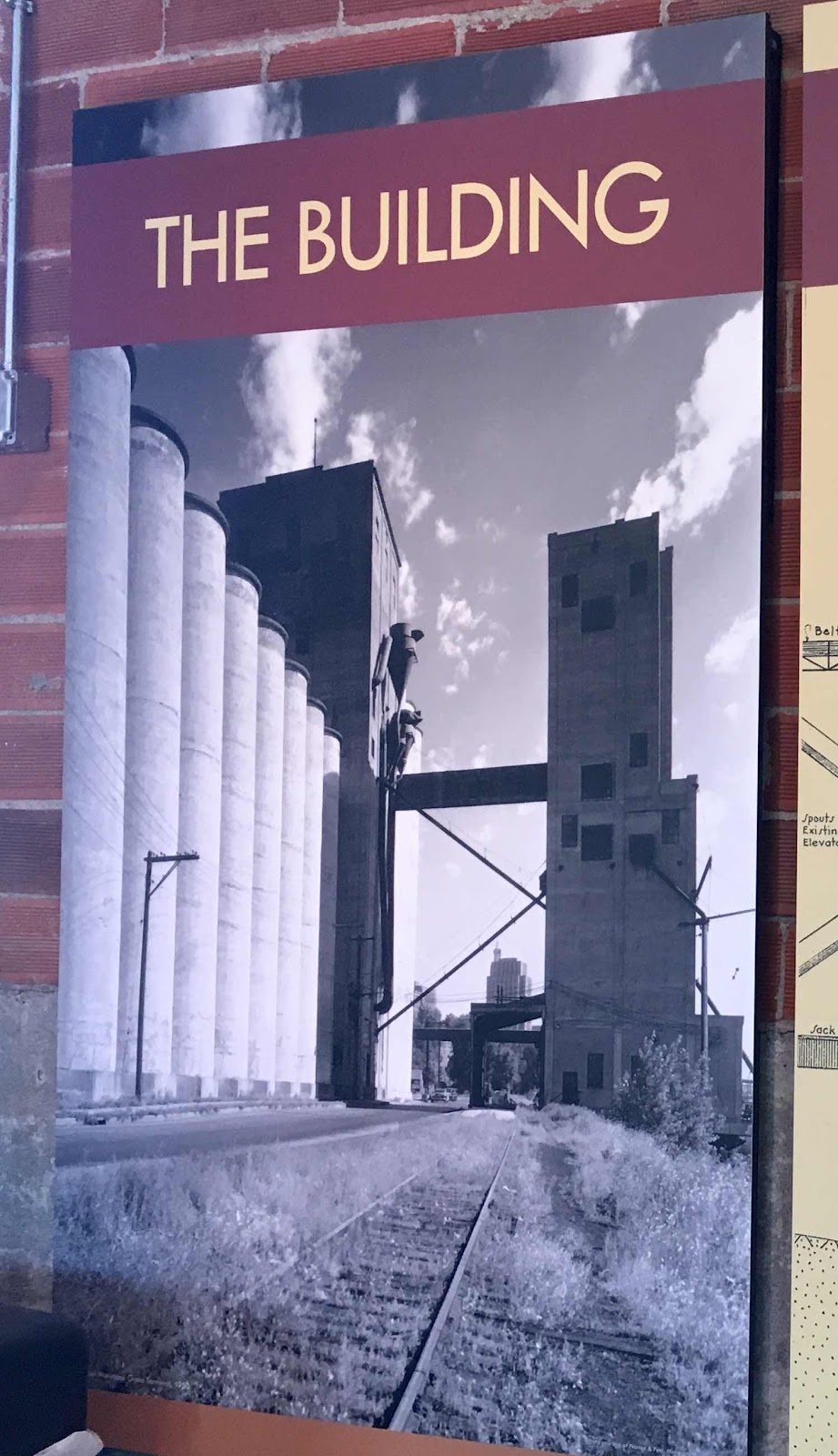
  There are also a few exhibits inside, showing the site in its heyday.  
  At one time there were a hundred grain silos and the flour mill adjacent to the Elevator.  Wheat traveled from the railroad cars to the mill next door by a conveyer between the buildings to be made into floor.  


  From St Paul the Midwestern grain traveled to the Great Lakes, down the Mississippi to the Atlantic Ocean and Europe, Africa, South America, and all the way around the Cape of Good Hope to China!  


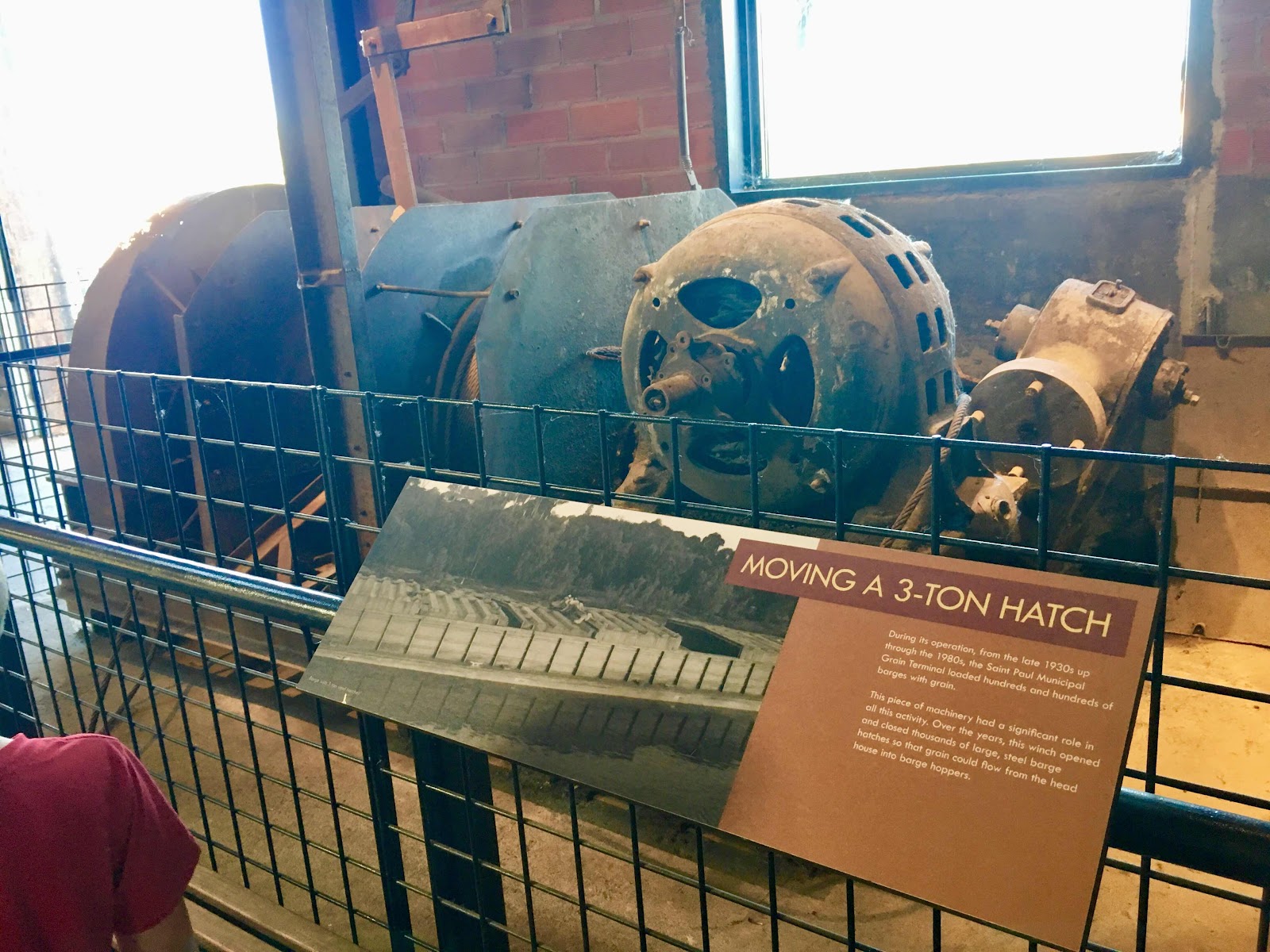
  There are a few pieces of machinery displayed inside the sack room, including this winch that was used in opening and closing the 3-ton iron hatches on top of the barges.  
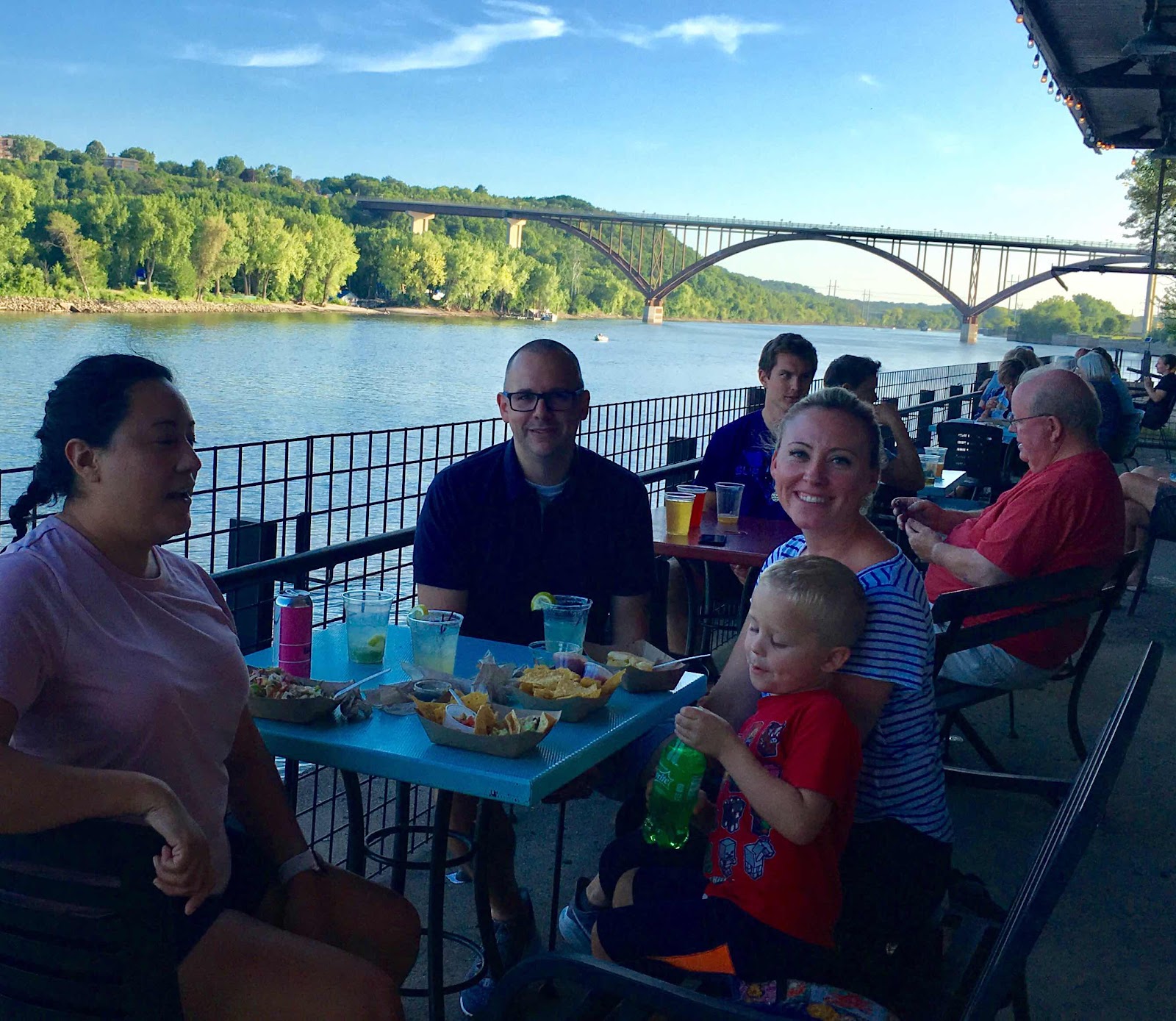
  We got drinks and food from the Red River Kitchen food truck and sat at a table outside overlooking the river.  (The area is too prone to flooding to have a permanent restaurant, hence the food truck.)

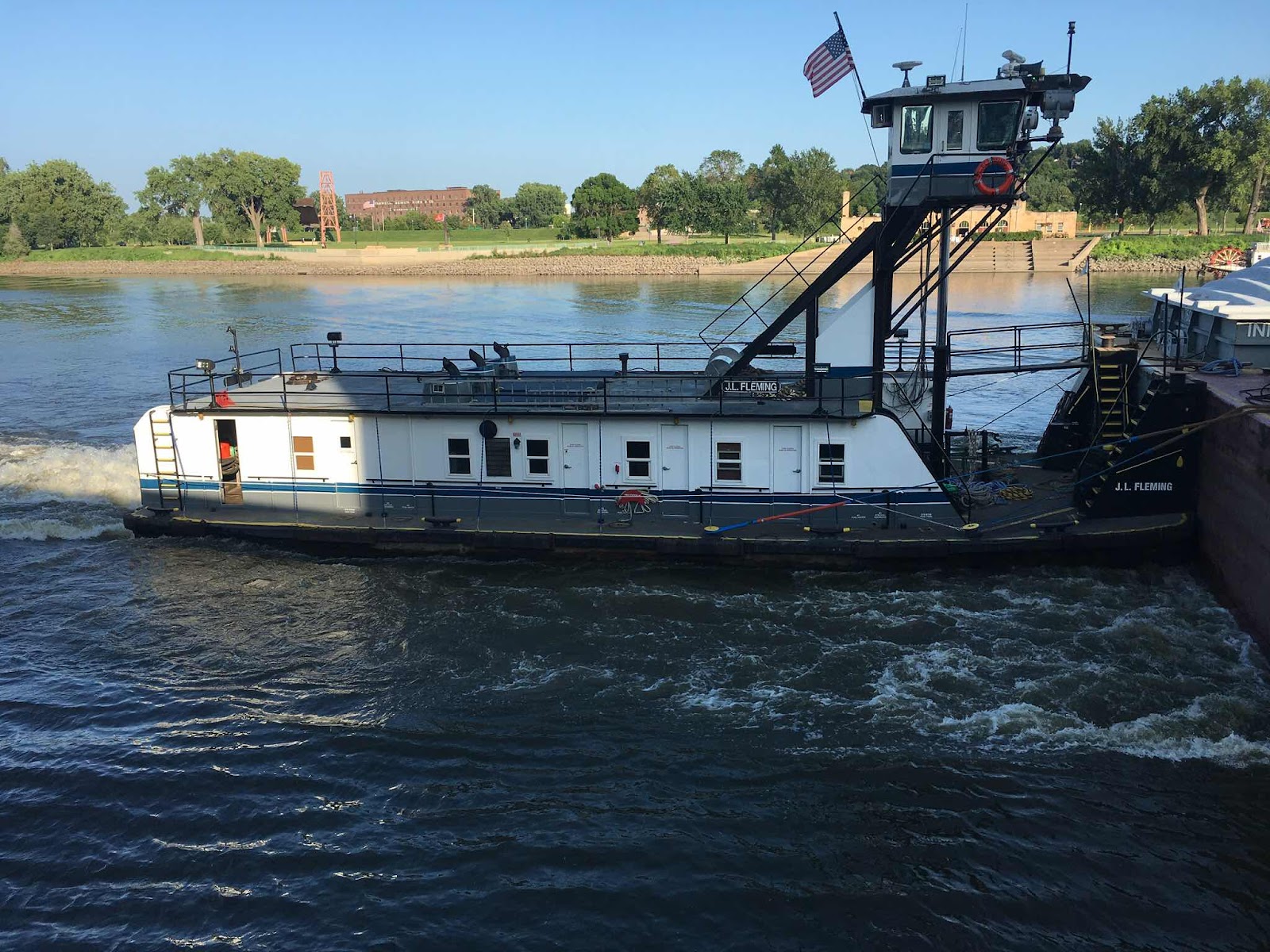
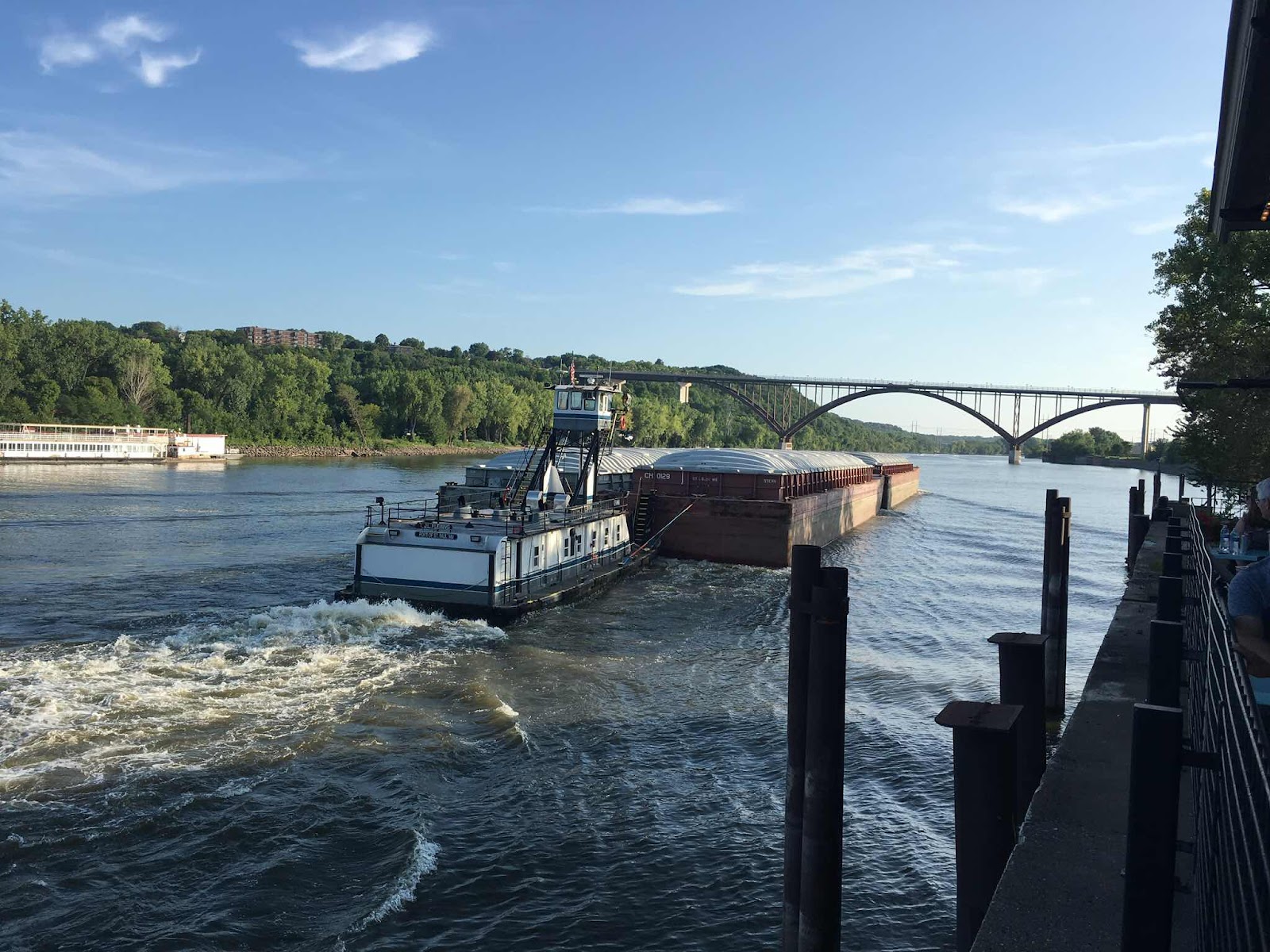
  As we were enjoying our dinner we heard blasts on a huge horn and ...

Look what came right by our table! 
 Mason was excited when the captain in the wheelhouse returned his waves!  


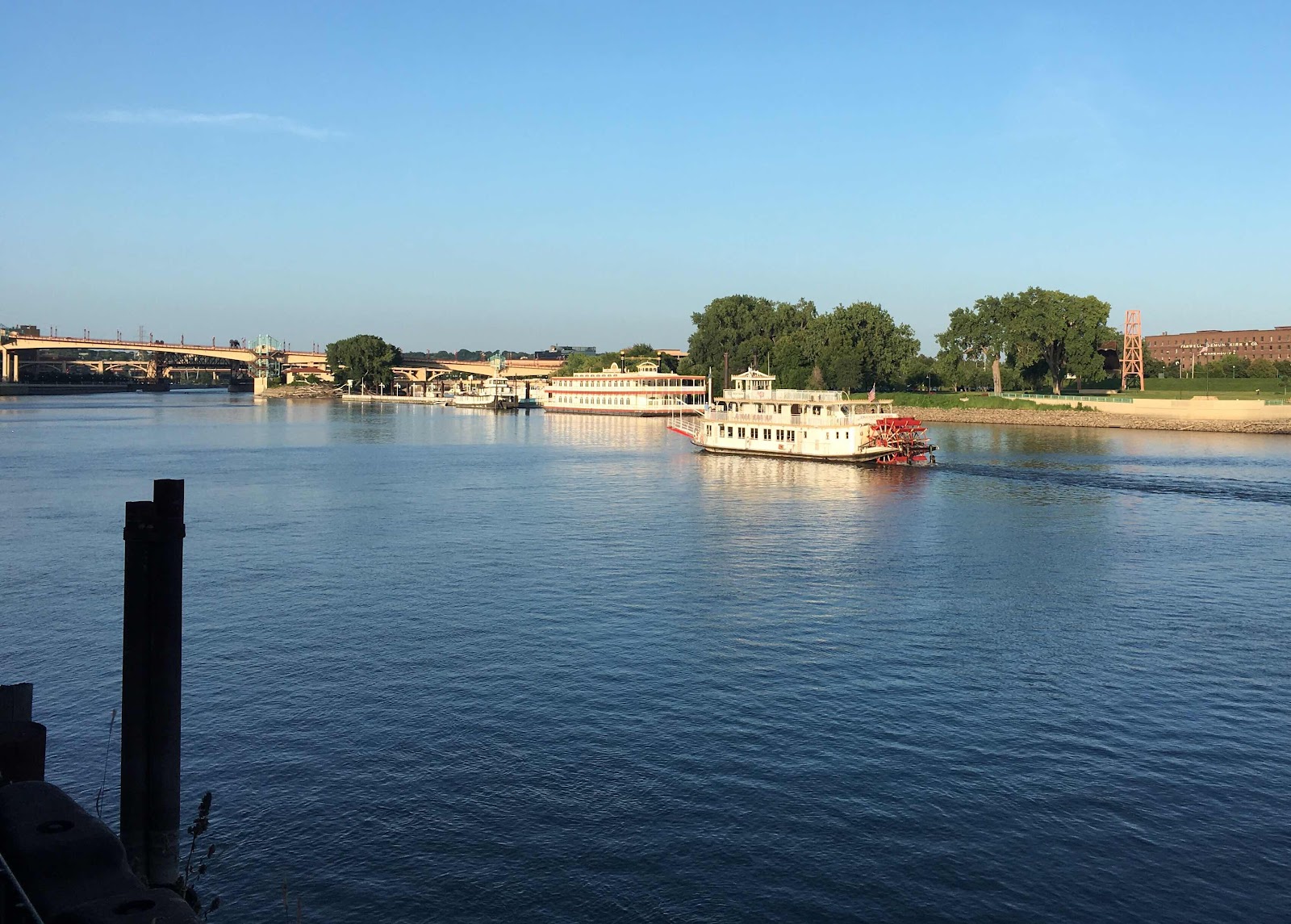
One last picture of the river ...
the Jonathan Padelford leaving for the evening’s dinner cruise up the river.


Wednesday, August 28, 2019

A Night Out in St Paul


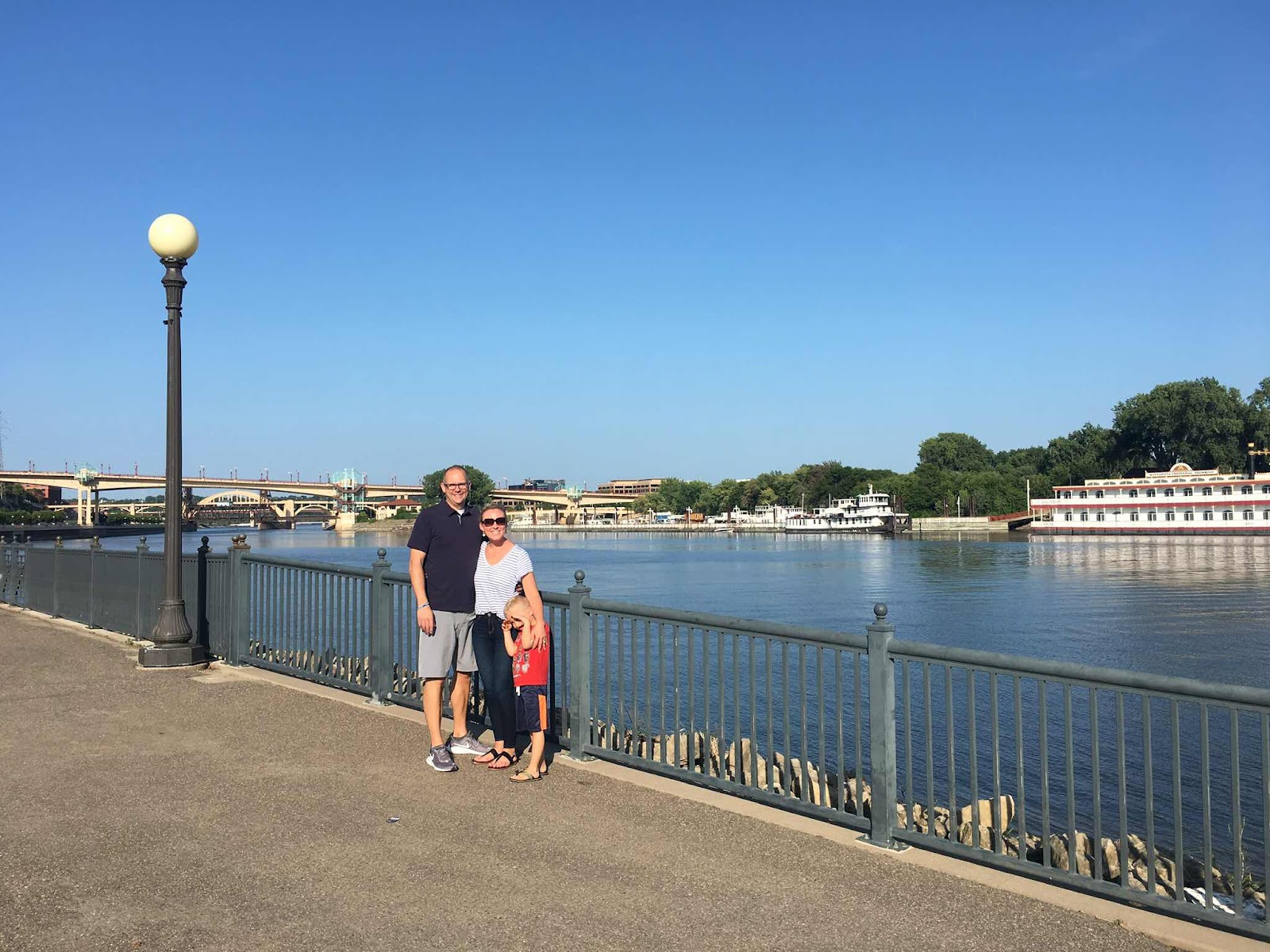
  On my recent trip to Minnesota we had a night out in St. Paul, the capital city. We parked along the Mississippi River near Upper Landing Park and walked along what is now a beautiful waterfront on a clean river on a gorgeous summer evening.  

  Looking north, in the distance you can see several of the more than a dozen bridges of St. Paul, including the Wabasha Street Bridge which crosses Raspberry Island to Harriet Island.  To the right are two paddlewheelers, the boats that have been plying the Mississippi since Mark Twain made them famous.  The one on the right used to be a showboat with musical theater but hasn’t been in use for several years.

  Looking south, a walking/biking path follows the river downstream in Upper Landing Park toward the old Municipal Grain Elevator ...

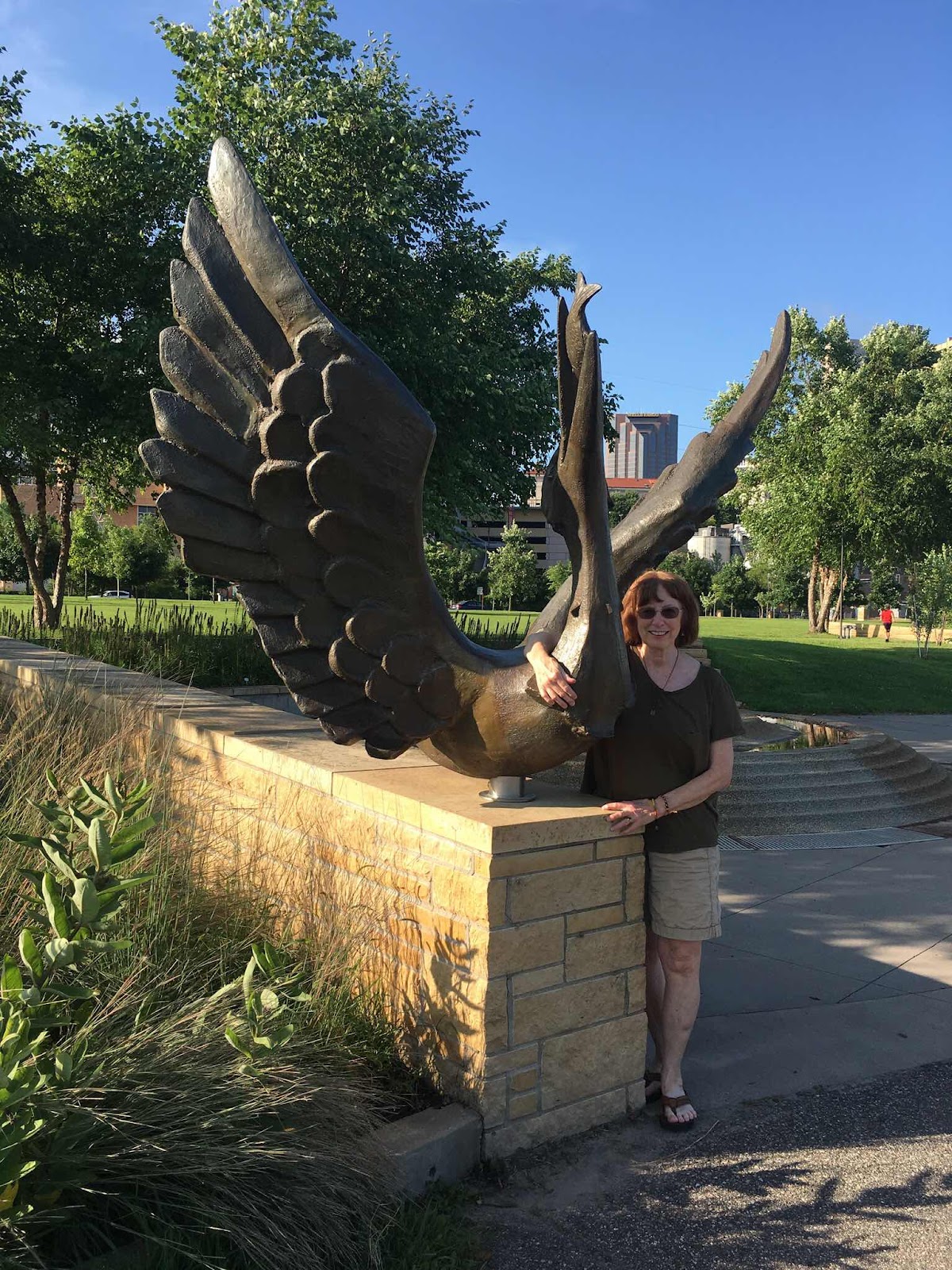
... and back upstream toward the city, past a flock of beautiful bird sculptures which represent the navigation and migration routes along the Mississippi, and ...


four fountains, including this one that Mason 
quite enjoyed playing on.  See the hammock napper in the background?


💧  ðŸ’§  ðŸ’§
  Such a beautiful public green space now with people enjoying the lush lawns and scenic trails, but this glimpse of its place in history is far from glamorous.
  
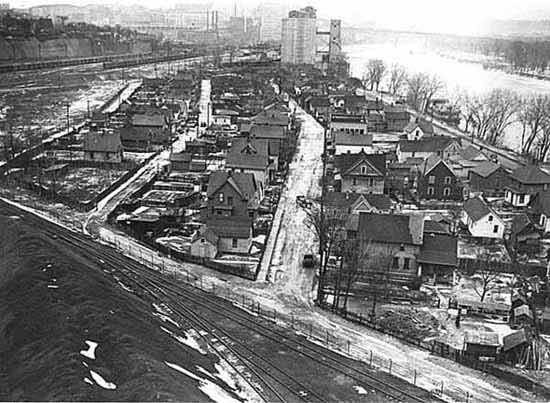
  The stretch of the river was once the busy center of shipping commerce and cargo docks for ore and lumber, and the undesirable areas of land alongside became settlements for the poorest of the poor.  The area called Bohemian Flats consisted of shacks built of flotsam and jetsam from the river by male immigrants from Czechoslovakia and Germany. The recently arrived single men were a wild bunch and Bohemian flats was known as a lawless and filthy place, constantly mentioned in the newspapers for drunken fights and other debauchery.  As their fortunes improved however, the men married, had families, and sought out better places to live in the city.  By the 1880s their shacks were deserted and new immigrants from a small area in Italy began to move in.


Upper Landing/Little Italy 1950s I think

  The men found hard work as laborers in the city, some for the railroads, and built their own homes.  Little Italy, as it came to be called, suffered from serious problems including the lack of a sewer system and clean drinking water, the foul-smelling river water, and constant flooding of homes when the river rose in the spring.  

  The community remained until a devastating flood in 1952, which  caused homes and school to be condemned.  Families were relocated against their will, the buildings were razed, and a scrapyard was built on top.  The riverfront remained a mess and an eyesore, contaminated with a hundred years of human and industrial waste. But in the late 1990s it was named a Superfund site and funds were available for a real cleanup.   
 
  Beginning in 2006, construction of attractive (and expensive!) high rise apartments and condos began.  Developers kept the old street names and named new ones after some of the successful inhabitants who began their lives in America there in Bohemian Flats and Little Italy.  

Friday, August 23, 2019

Like a Kid in a Candy Store

   Perfect summer weather in Minnesota so I hopped on a plane and am-scrayed out of the tropical sauna that is South Carolina in August to see my kids and grandboys.  Sunny, 70s, and no humidity —  perfect to have some adventures with four little boys.  


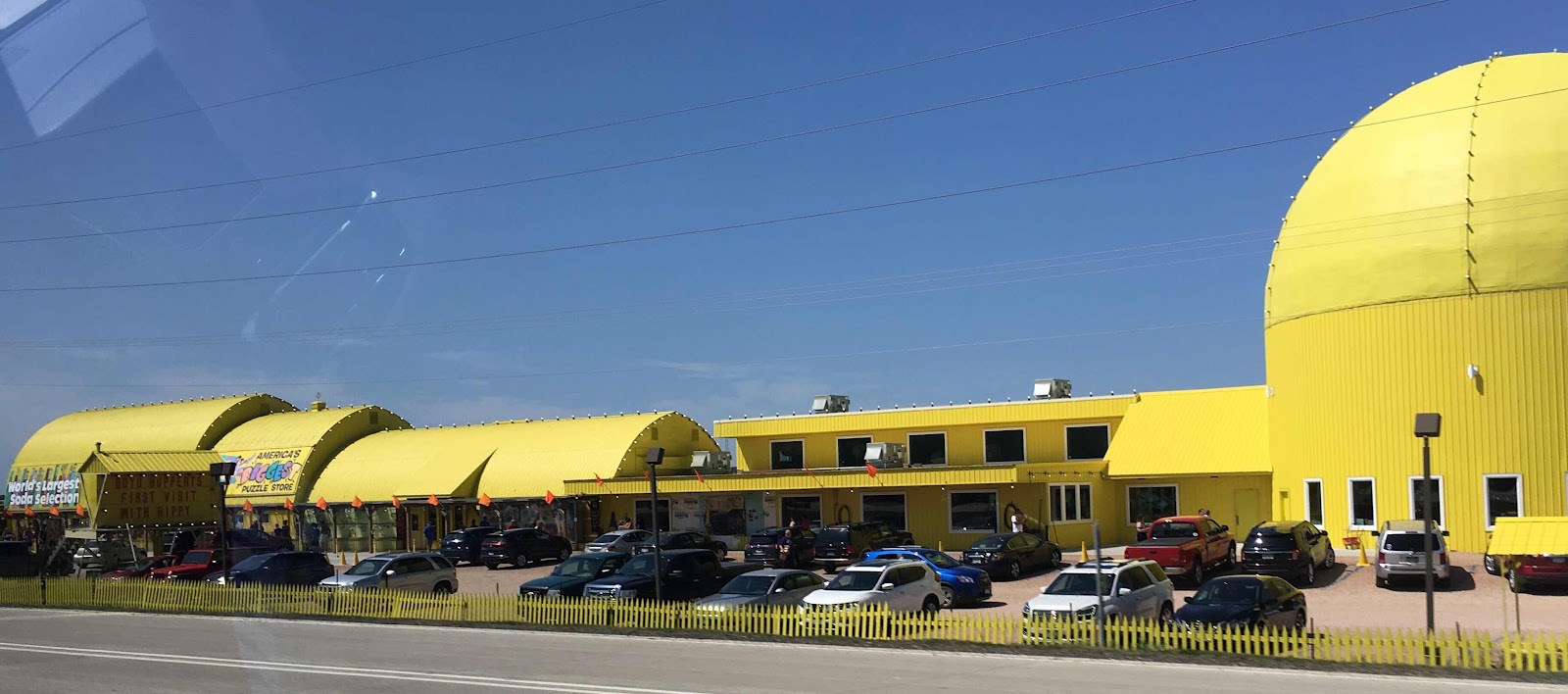
  A bright yellow picket fence runs for miles along the highway and cornfields near Jordan, building anticipation and raising the excitement level in the car several notches per mile.  


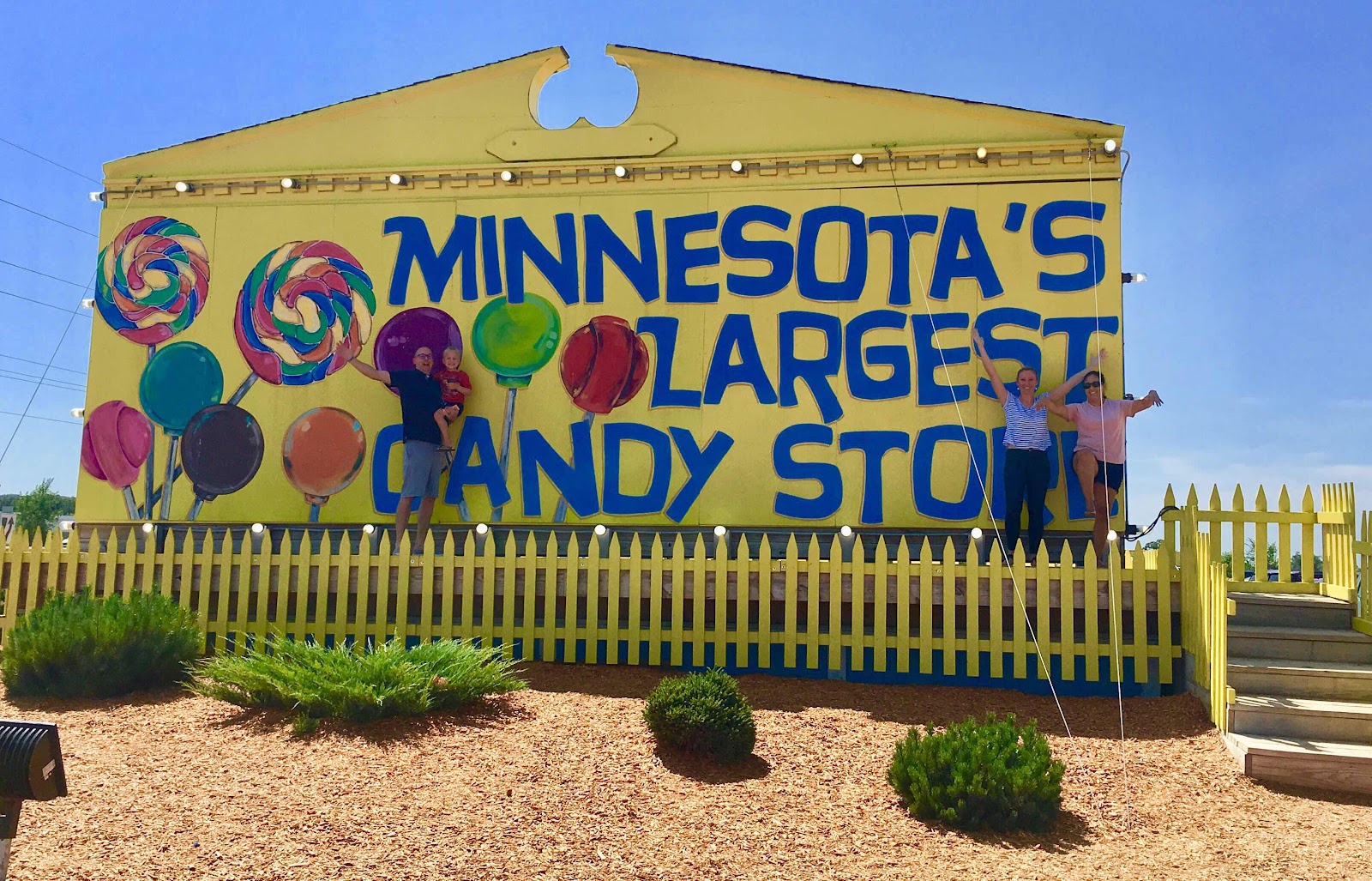
  And then there it is, a yellow behemoth rising from the prairie!  A candy store to rival all candy stores, a good example of turning lemons into lemonade.  
  
When the Wagner family’s commercial apple orchard was nearly wiped out by devastating hail storms two years in a row, they conjured up a vision of a seasonal candy store like nothing seen before in the Land of 10,000 Lakes. Longer than the Vikings football field, Minnesota’s Largest Candy Store has kept growing over the years and is filled with over 3,000 different varieties of candy.  

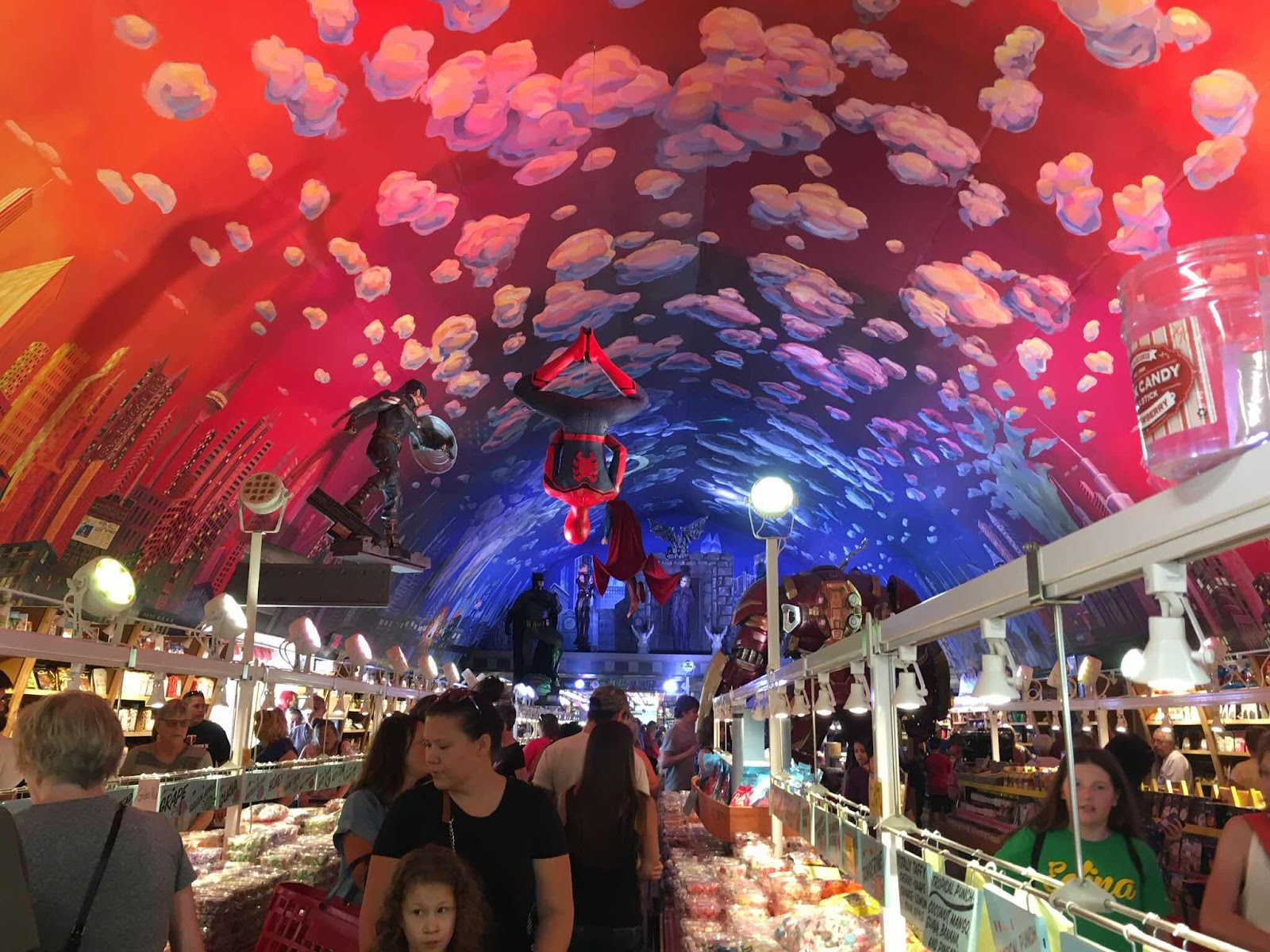
  It’s a tradition for my daughter’s family (along with about a million other families, judging by the jam-packed aisles) to indulge their sweet tooths (teeth?) once a year.  And I got to go along!


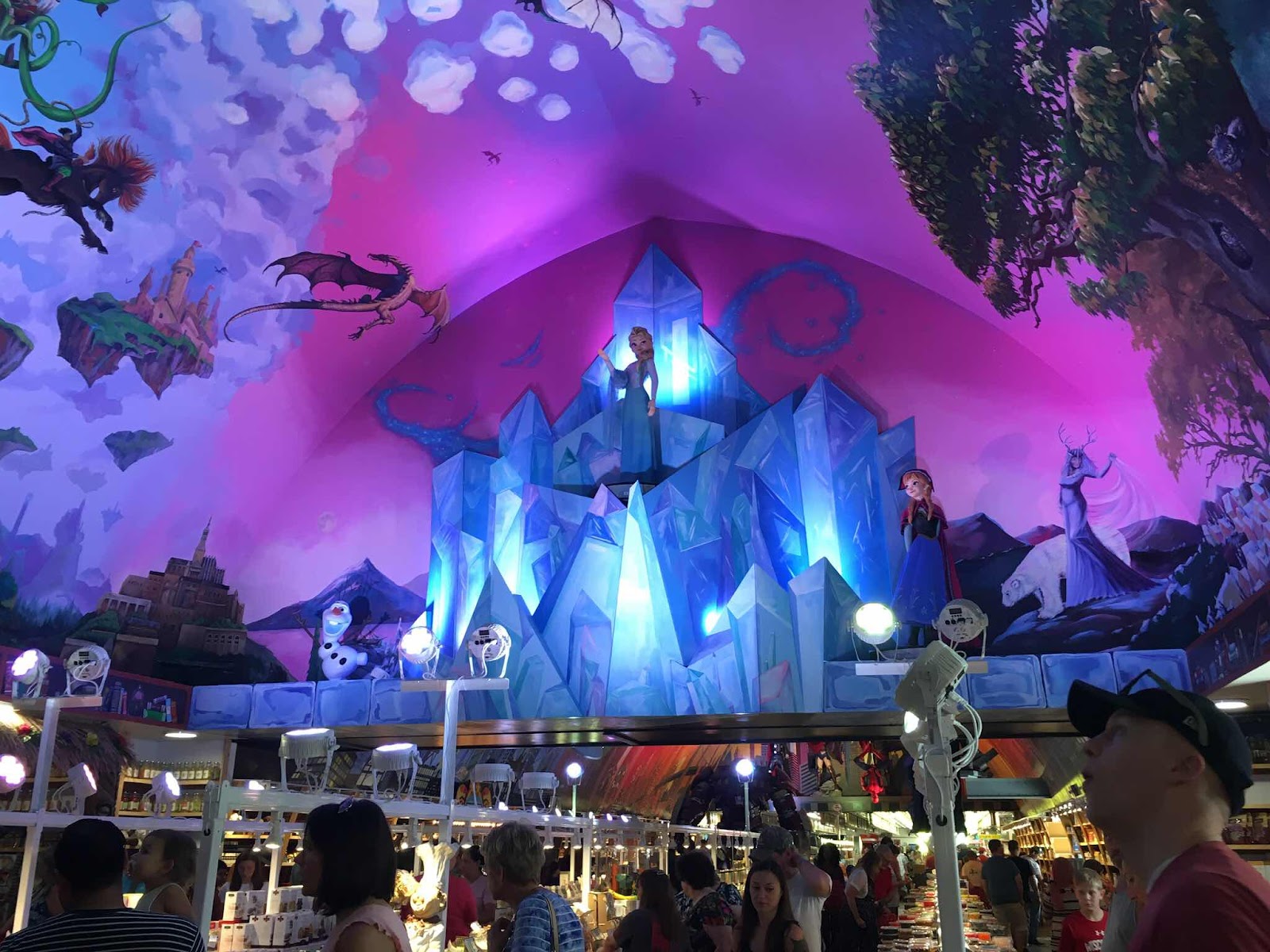
  The aisles are narrow and numerous, piled with every kind of candy you remember from your childhood (and a whole lot more you don’t!). Overhead domes feature movie characters, this one with 24 more than life-size super heroes protecting the world from above. 


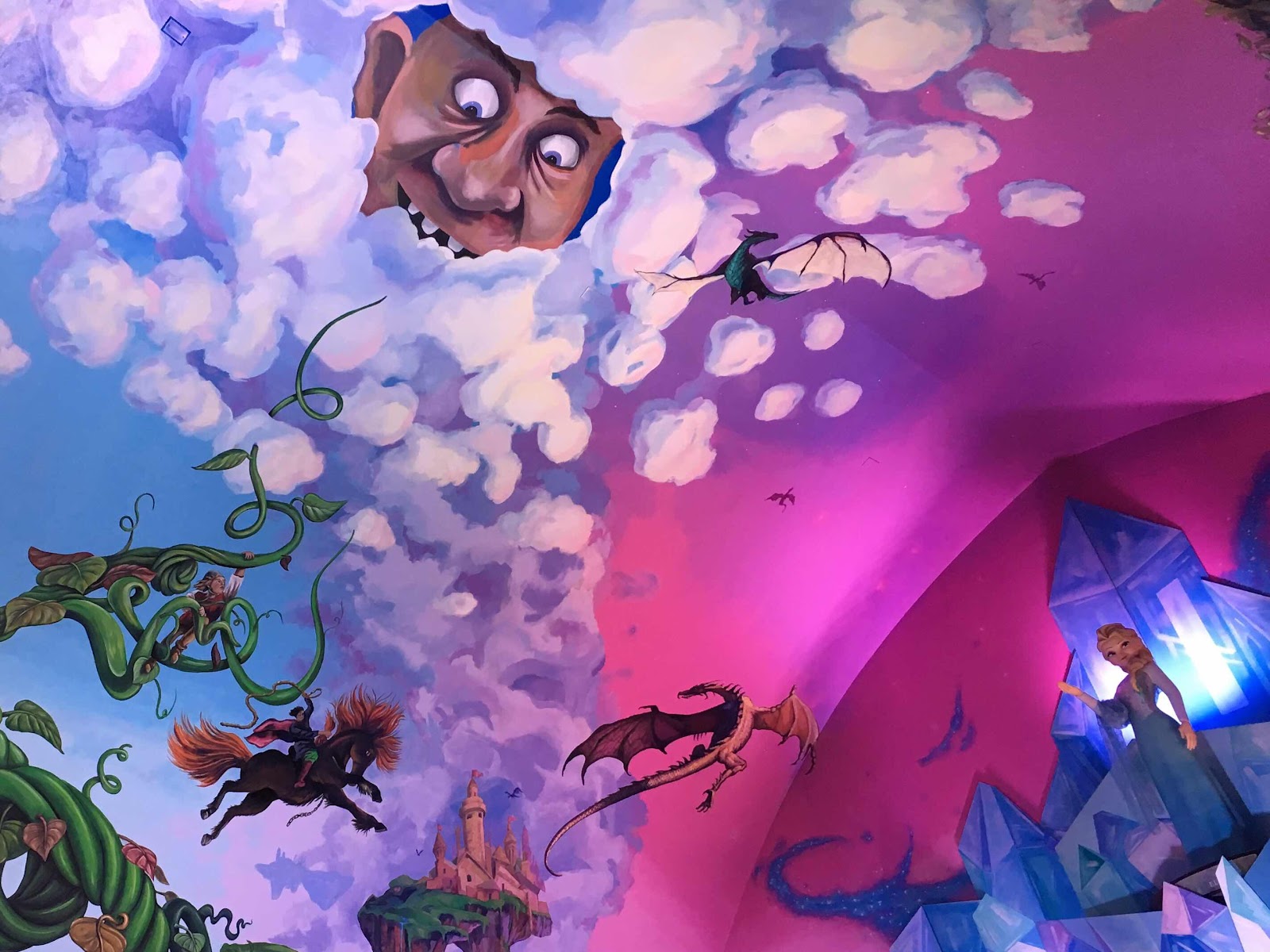
  Another room, another dome — 


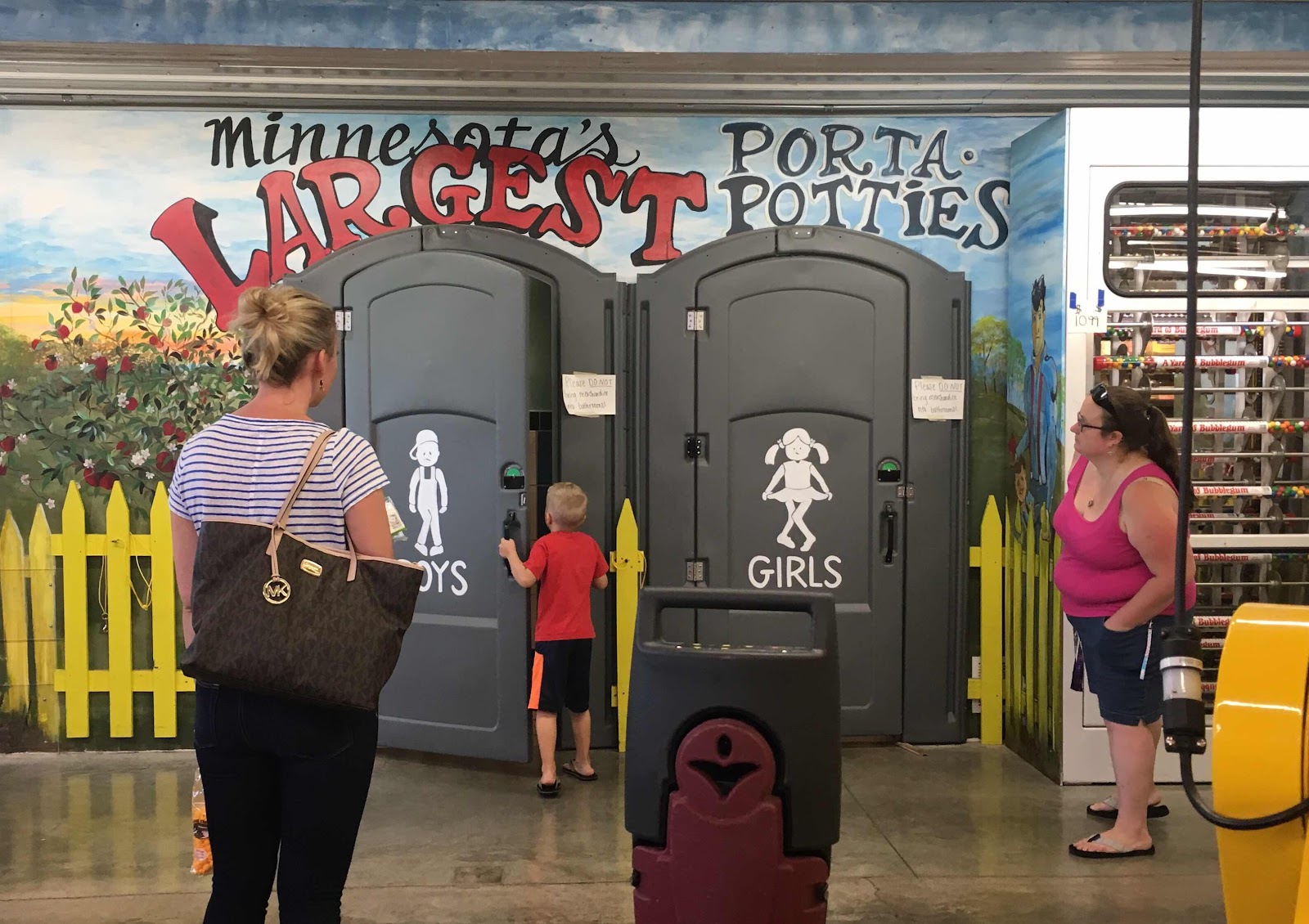
And of course, the largest PortaPotties in Minnesota. 


 When you open the door — 
Surprise! 

You walk into an immaculate full-fledged restroom instead of a portable toilet.  


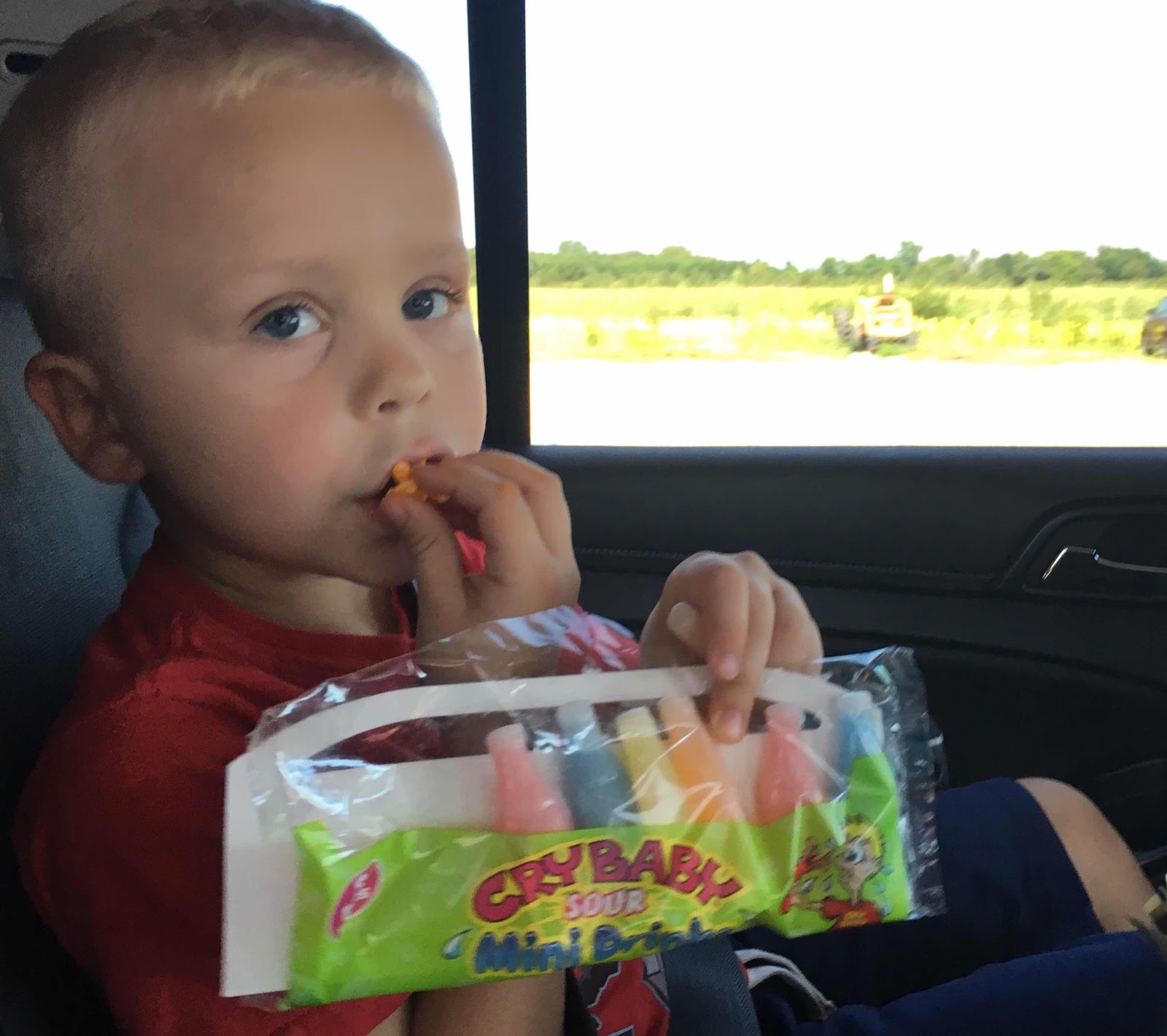
   Mason was on a mission, ignoring all the other treats to find his favorite candy, and he found it.   I loved these little wax bottles when I was a child, too, and was amazed to see they are still around.  Of course, they were filled with root beer flavor then. Mason enjoyed every last one of his on the trip home!  

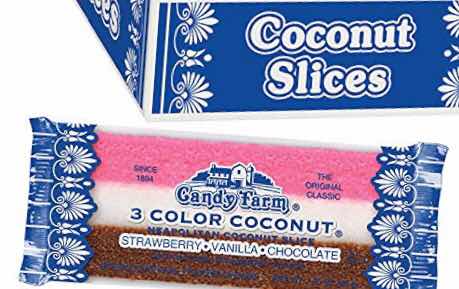
  Well, I’m sure you are wondering about my choice in all this world of sugar!  I bypassed chocolate from every corner of the world for my favorite “penny candy” when I was a child.  


  Who knew it was even still made! I seem to remember you could also get them in the shape of watermelon slices.

  I’m curious.  What was your favorite choice when you were say, seven or eight?  (And feel free to reminisce over more than one!)


Monday, August 5, 2019

Can’t You Sea?

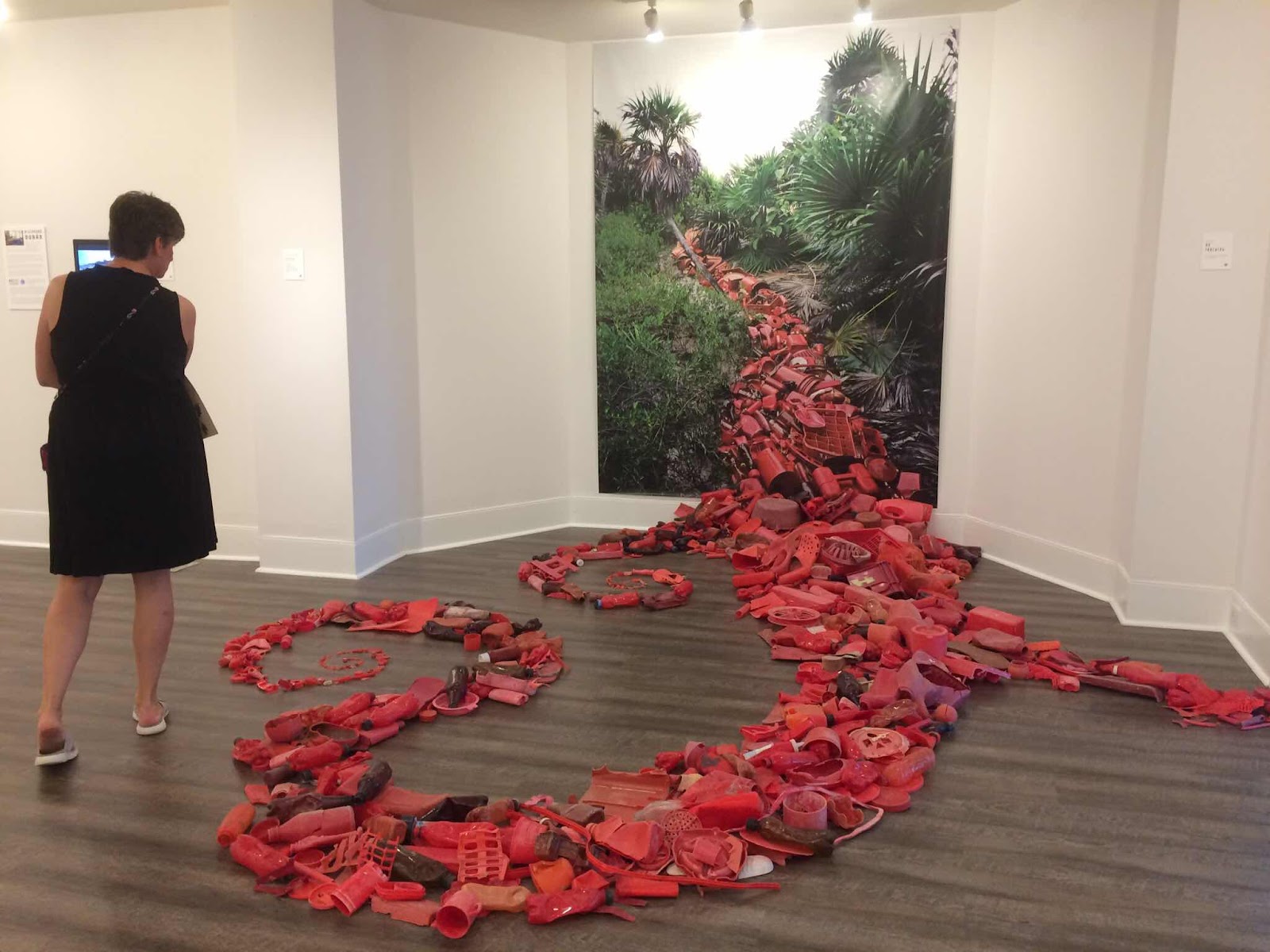
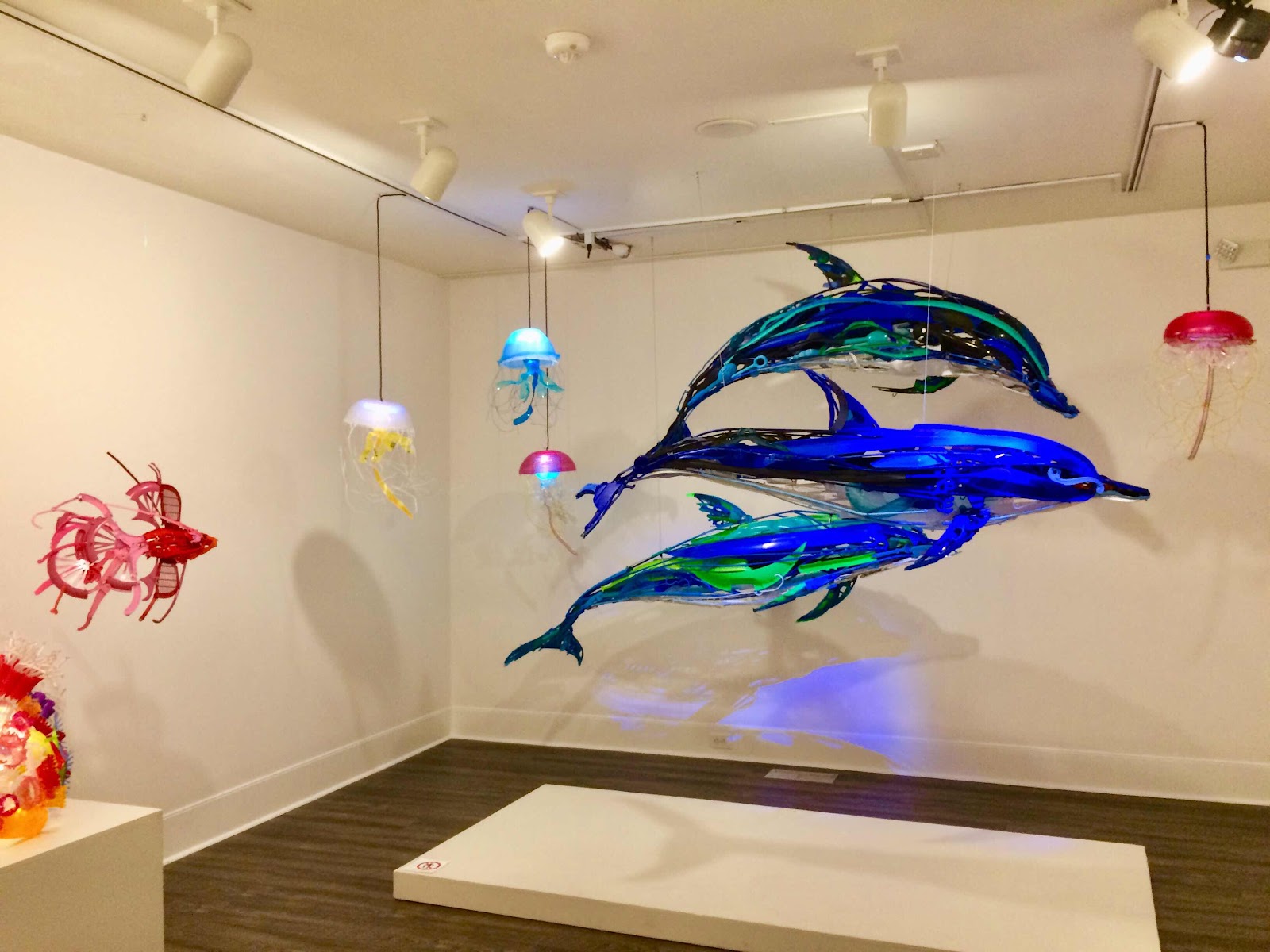
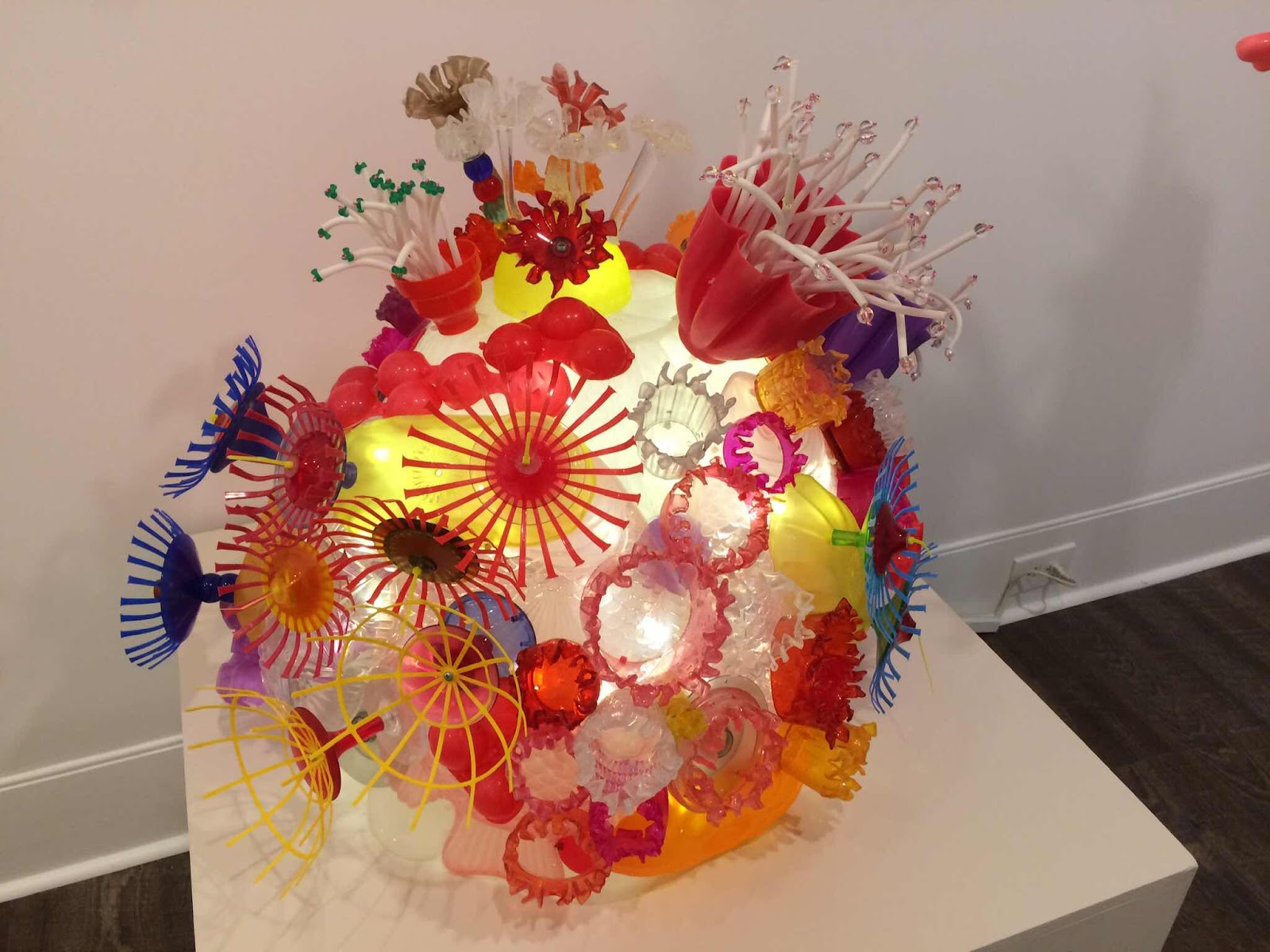
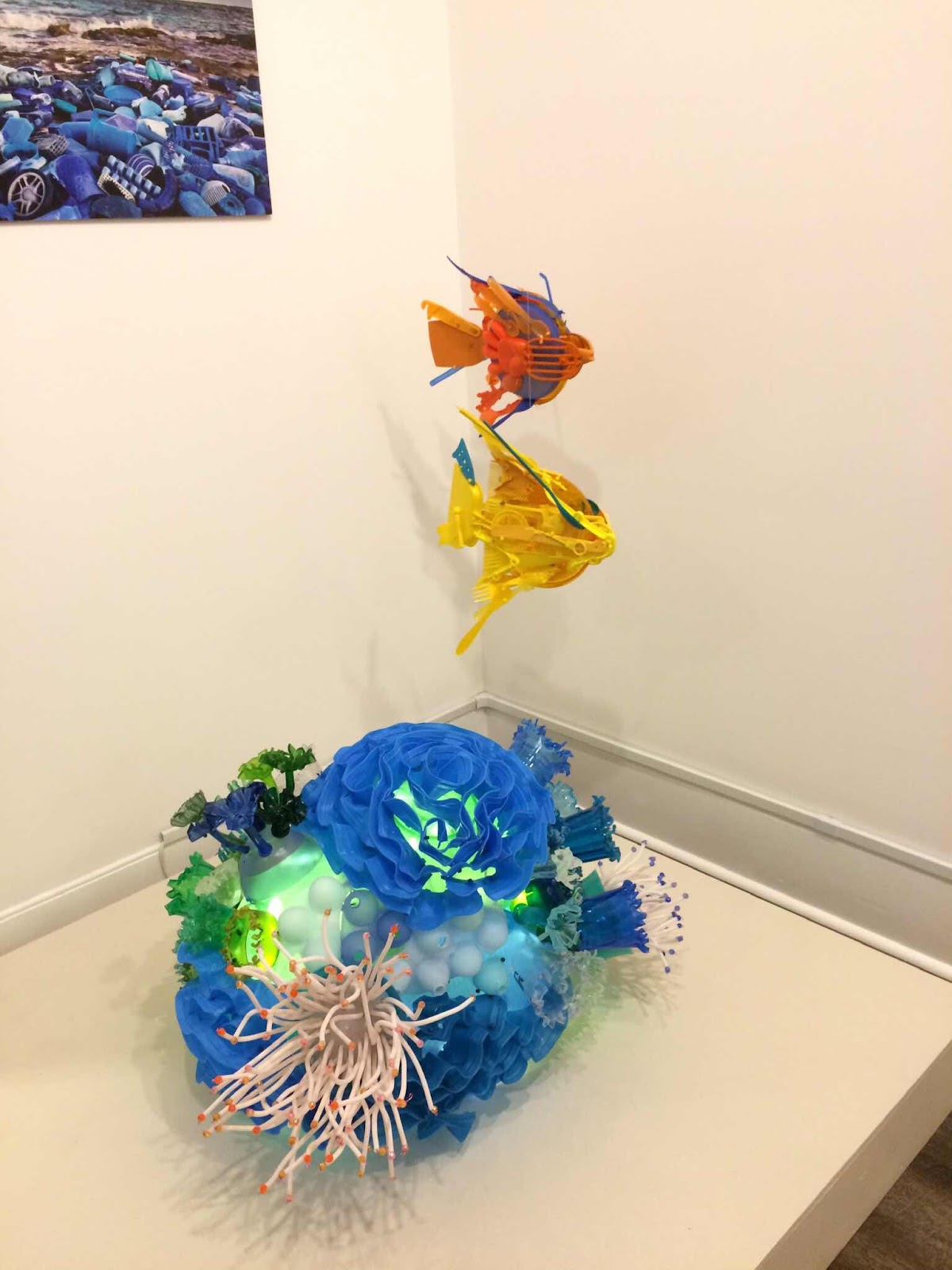
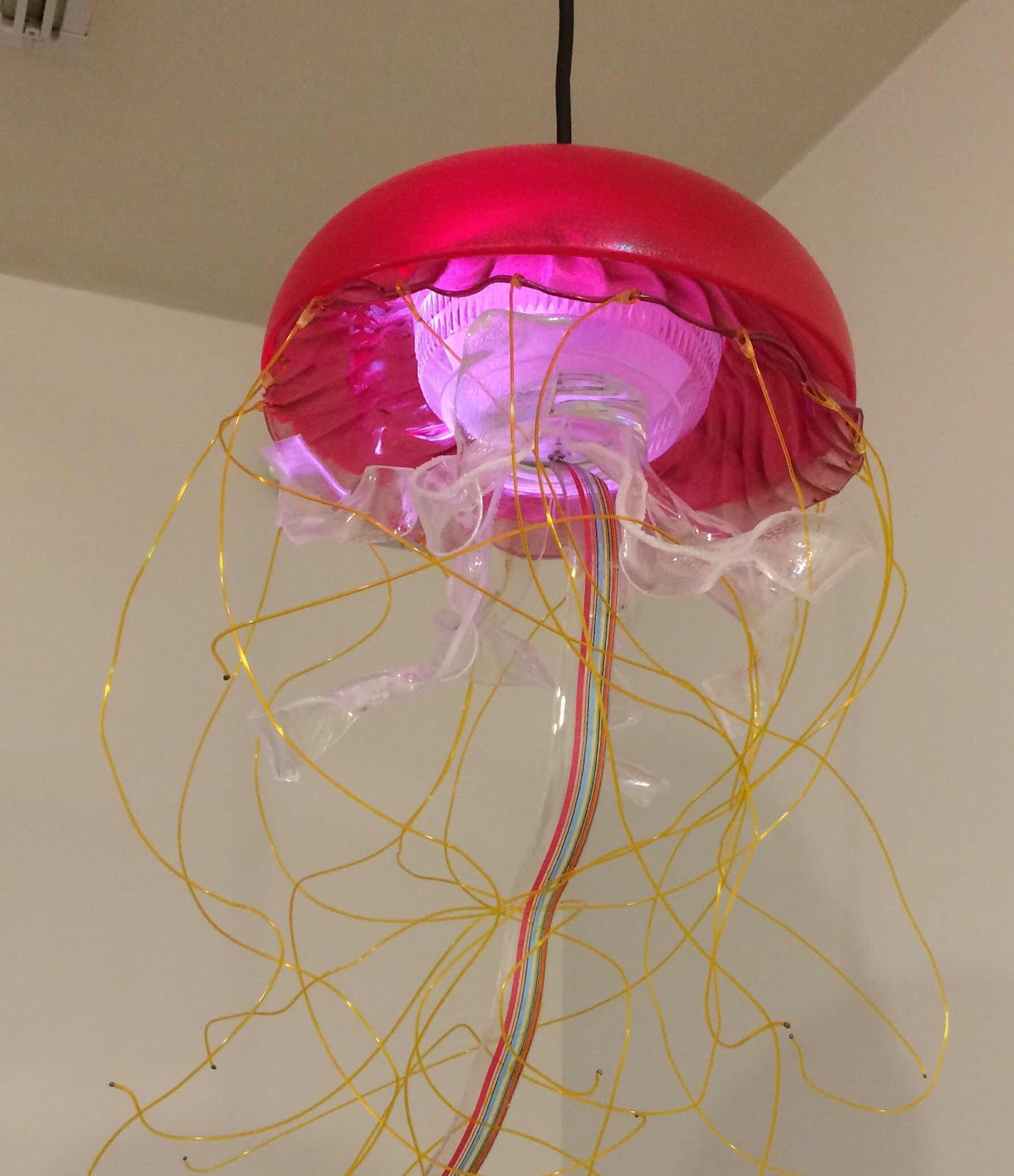
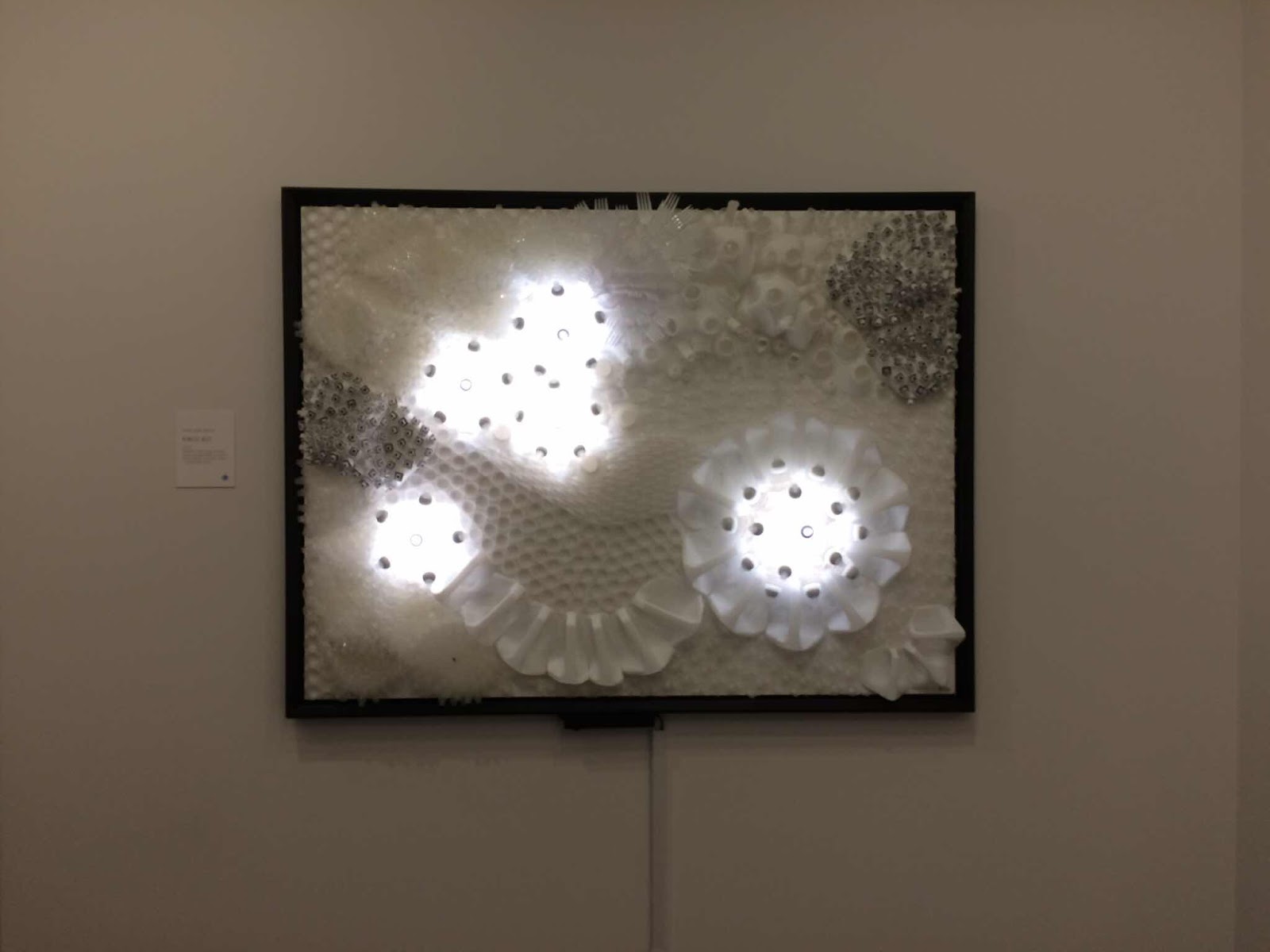
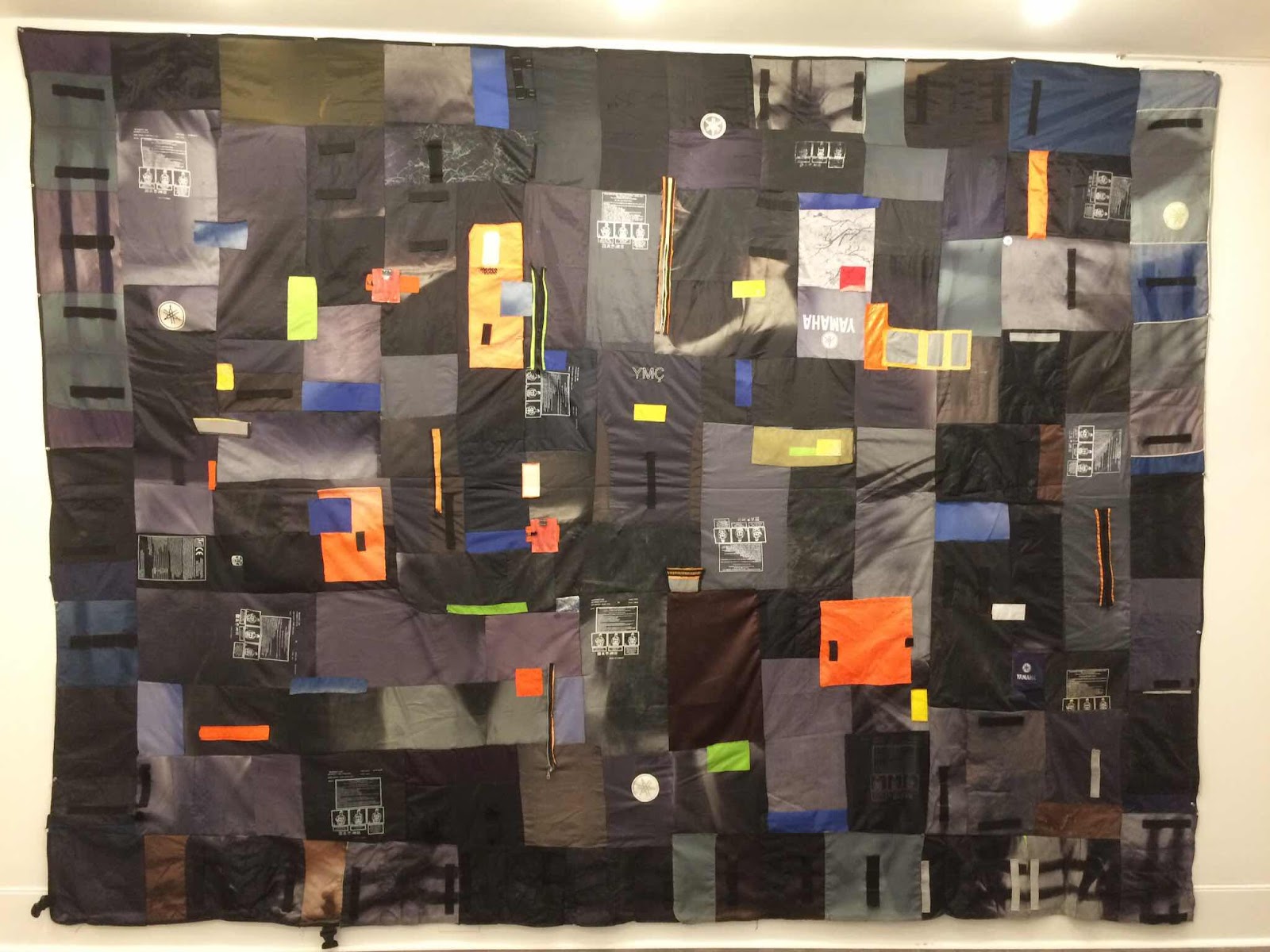
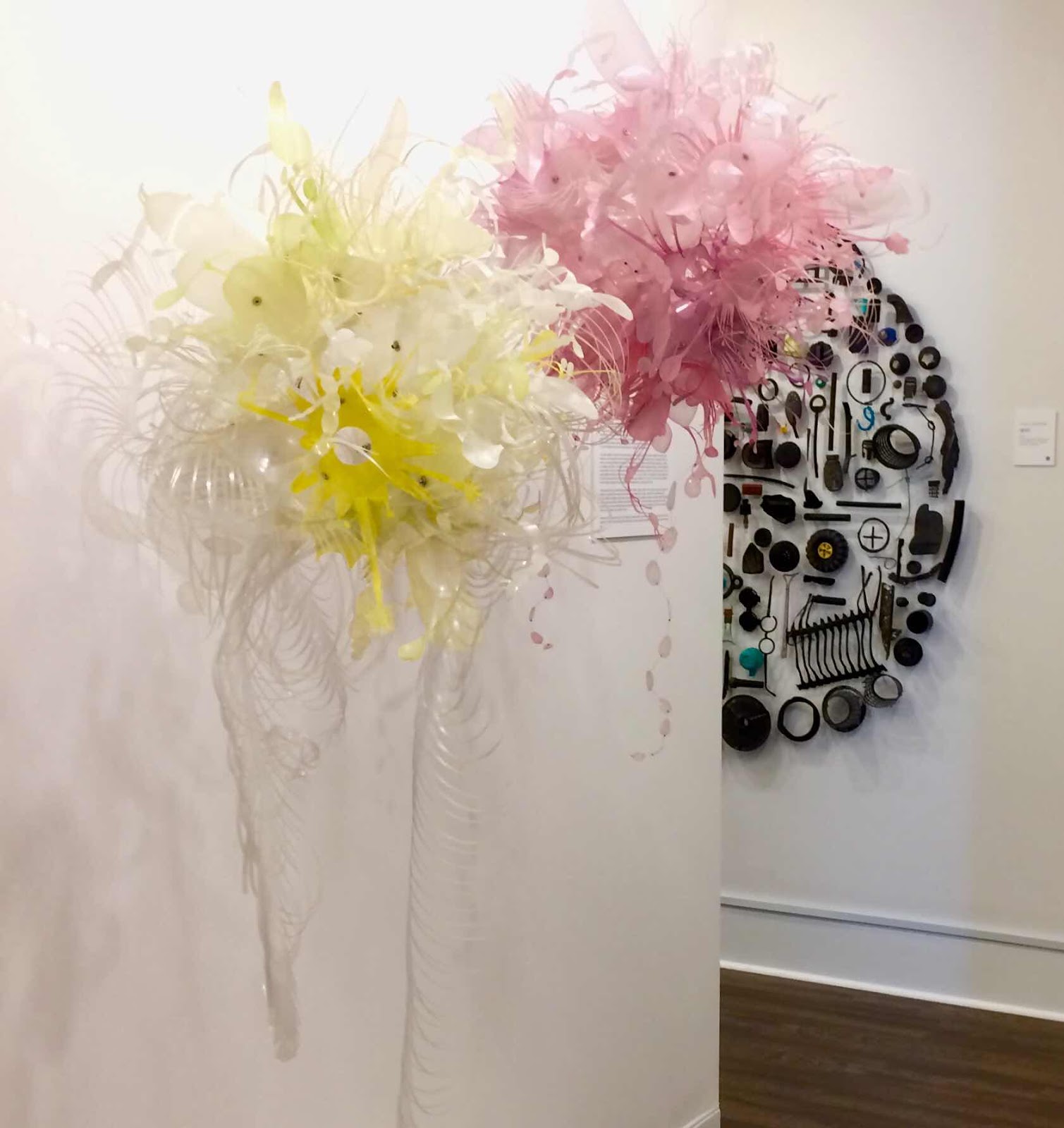
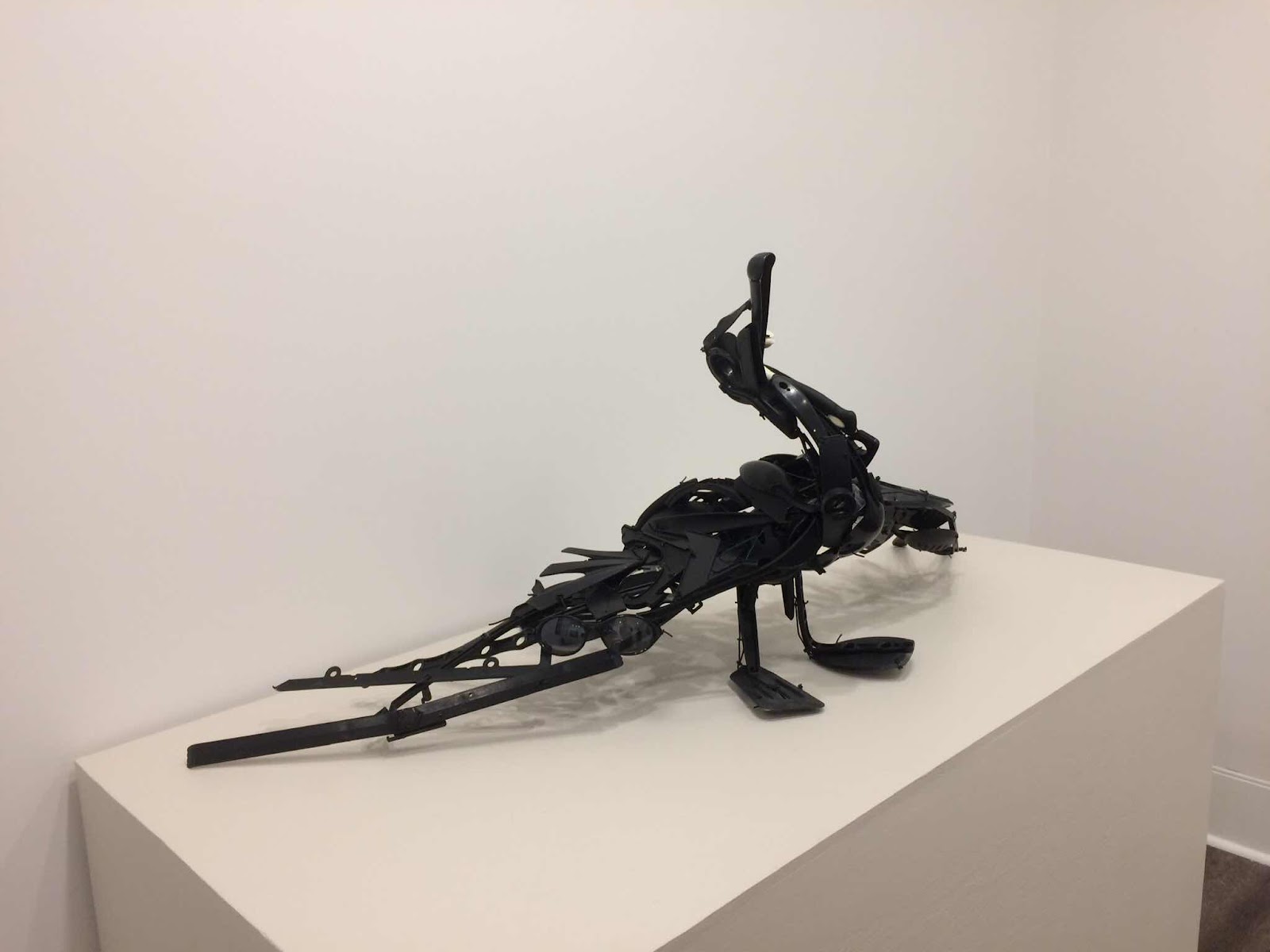
  Last month was designated “Plastic Free July” across the world to increase awareness of the plastic pollution overwhelming our planet and to get people thinking about making changes in how we use it.  Our local art museum had an interesting exhibit, Can’t You Sea?, of art made from discarded plastic, along with special speakers and events, and a free month-long continuous showing of the documentary film, A Plastic Ocean.
  Here are some of our favorite pieces from the gallery.
                                             Washed Up, garbage collected from Sian Ka’an, Mexico.

Japanese artist Sayaka Ganz (reclaimed plastic cable ties, LED wire, plastic ware)


Ganz


Ganz


Ganz


Kirkland Smith (computer keys, milk jugs, bottle caps, contact lens cases, plastic forks)


Pamela Longobardi (recovered life vests from Lesvos, Greece)


Aurora Robson (plastic debris, rivets, washers, tinted polycyclic, mica powder)


Ganz (plastic objects, wire, and cable ties)

  If you haven’t seen the documentary, A Plastic Ocean, I highly recommend it.  If you watch it, I don’t think you will ever think of plastic the same way again!

A brief description:

  The film starts off as an adventure to photograph the blue whale, the largest animal on the planet.  What journalist Craig Leeson encounters on his quest is shocking — a dangerous layer of plastic debris and filth covering the world’s seas and beach communities that were recently pristine. He is joined by diver Tanya Lee and for the next four years they explore and document the mess caused by decades of plastic use. 

  Perhaps the most frightening aspect of plastic debris is that it degrades into micro fibers which enter the food chain and ground water and from there move into human beings. Micro fibers are already being found present in much of what we ingest (from beer to seafood) and are made up of chemicals that alter normal function of the human endocrine system, impair brain development, cause learning disabilities, and increase incidences of cancers.

  Below is a trailer for the film.  You can watch the complete documentary on line.


Monday, July 29, 2019

What Goes Around, Comes Around


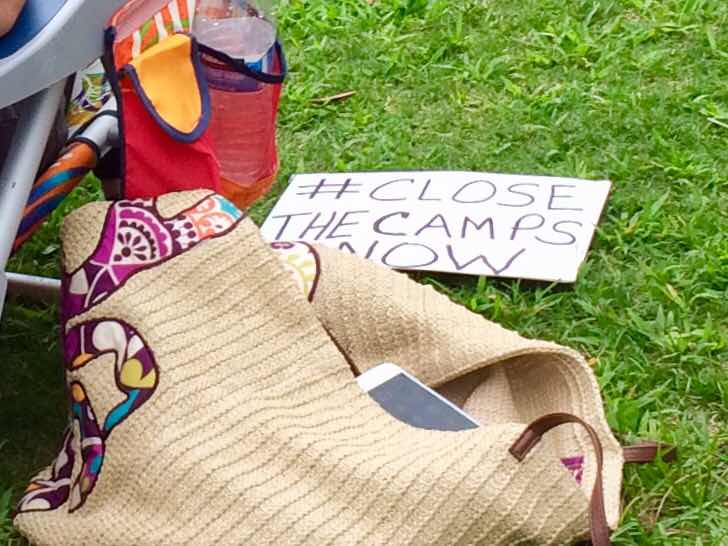
  The way immigrants, children, — babies! — are being treated in inhumane camps at the border of my country, in the heartland where they are afraid to come out of their homes lest they be snatched from their families — breaks my heart. 

  The Writer and I did not expect to be attending vigils and singing protest songs we sang in our teens again in our old age.


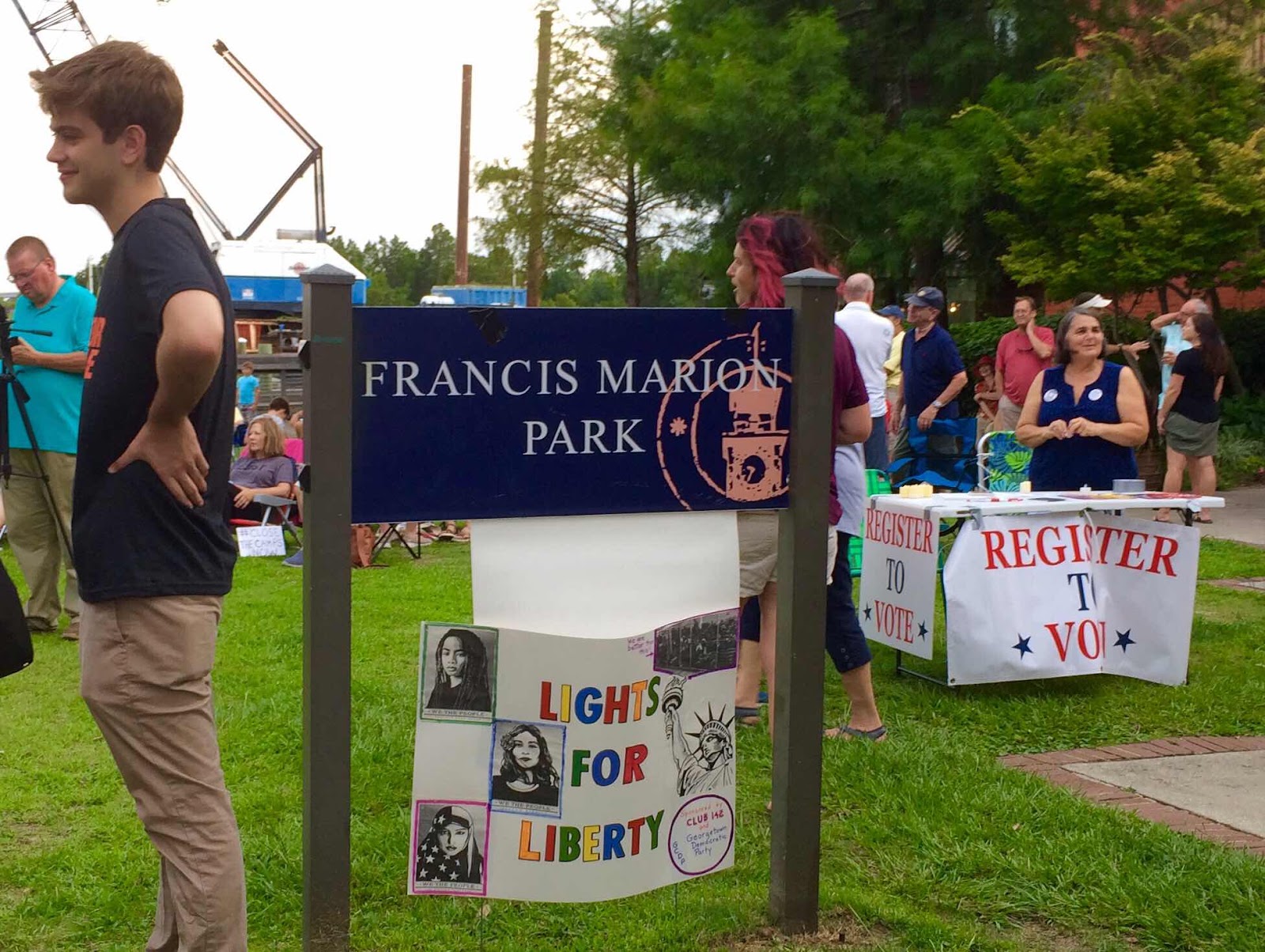
  Earlier this month communities across the country announced candlelight vigils to show support for more humane treatment for asylum seekers from Latin America.  


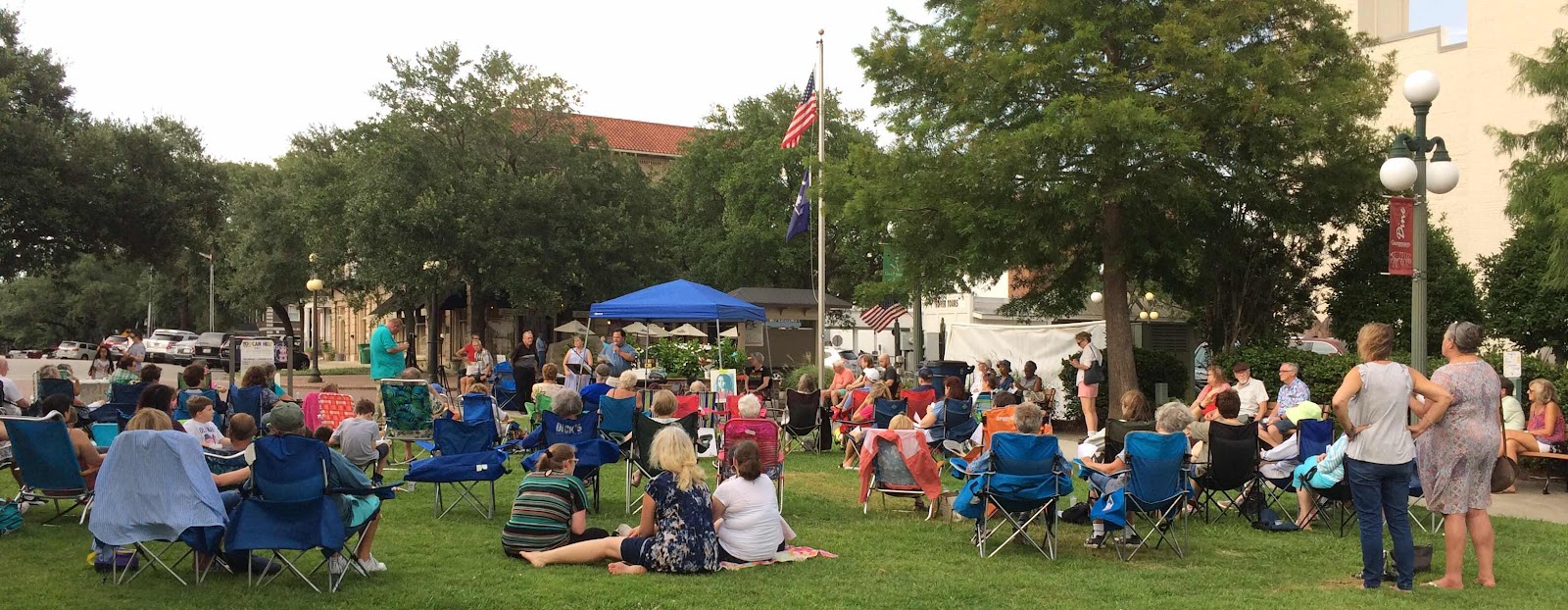
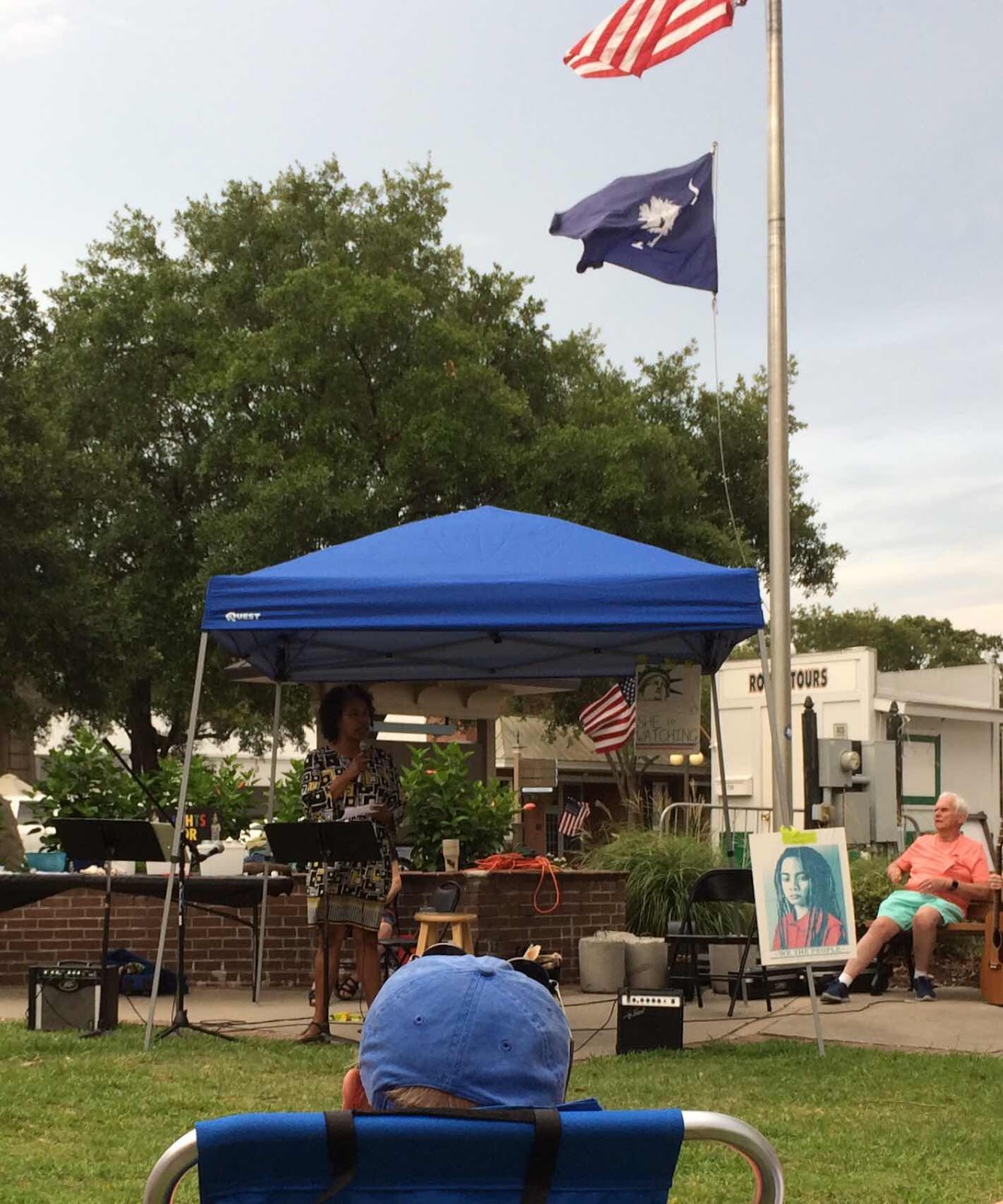
  Georgetown (pop. 9000) is not a diverse community at all and for the most part doesn’t have much enthusiasm for outsiders (including those of us from north of the Mason Dixon Line!).  We wondered if we would be the only ones showing up in the park.  We were pleasantly surprised.  


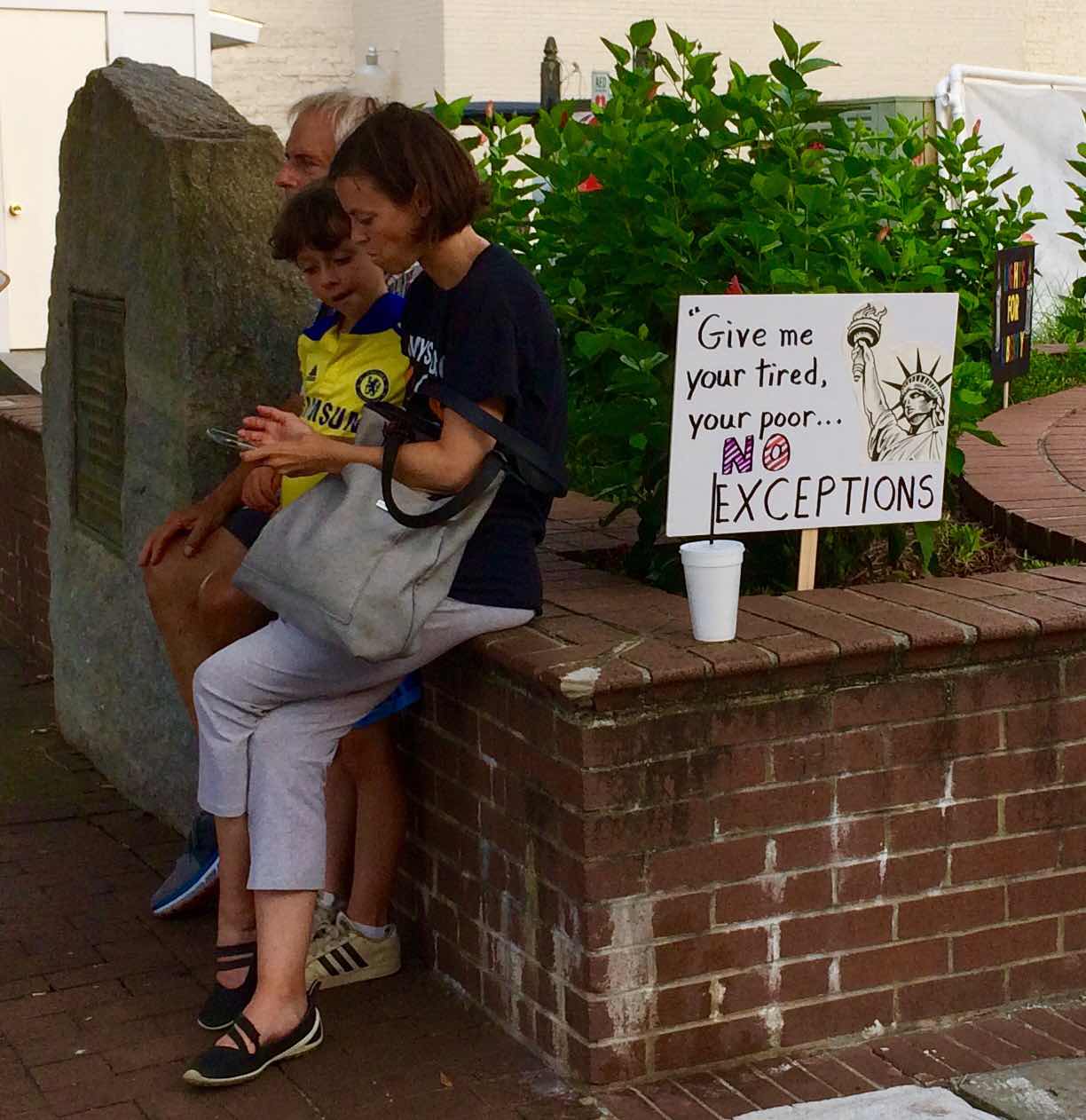
  There were handmade signs ...


and speakers (including a Native American elder, a worried honor student - DACA recipient, a war refugee from Germany in the 1940s, a passionate and eloquent young Gullah woman (above), descendant of African immigrants who were forced into slavery),


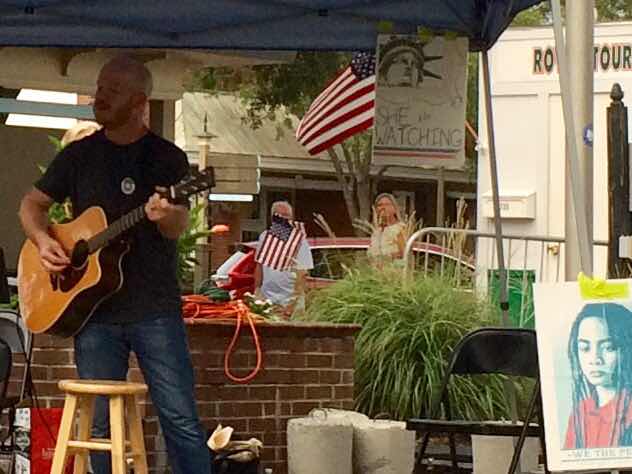
and musicians to lead us in songs for which some of us did not need the song sheets to remember all the words. 


When is the last time you sang all the verses of This Land is Your Land, Blowin’ in the Wind or If I Had a Hammer?  For us ... oh, nearly 50 years!  


Finally, we lit candles as the darkness fell on the beautiful harbor behind us and stood together to sing a last song of love and compassion for those frightened, tired, hungry, dirty and hopeful human beings in the camps.
Someone's crying Lord, kumbaya
Oh Lord, kumbaya*

*  Sung in the Gullah culture of  South Carolina and Georgia, with ties to enslaved West Africans. The song is thought to have spread from the islands to other Southern states and the North, as well as other places in the world. 


Saturday, July 13, 2019

Gallivants Ferry on the Little Peedee


  Minnesota might have 10,000 lakes but I’m pretty sure more of the surface of South Carolina is covered with water than Minnesota’s is.  From the coast west, the land is covered with rivers and swamps that limit travel, isolating farms and communities.  Nowadays we zip over causeways and bridges to get from here to there, but those who were here in the 1700s and 1800s had to deal with the water at ground level.  
  Ferries were the only way to go.
The Little Pee Dee River at Gallivants Ferry

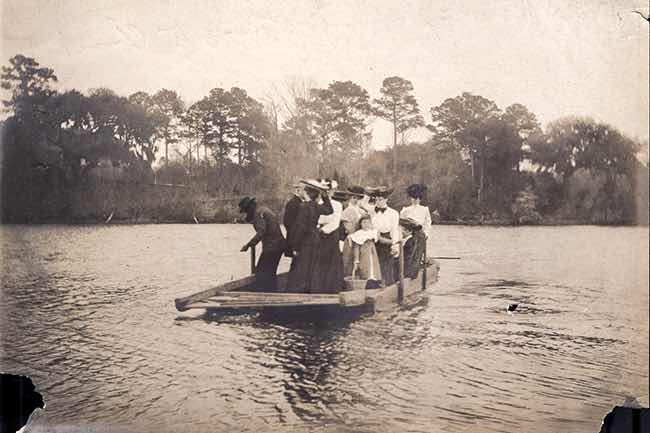
  The first ferries were simple flat-bottomed rafts or even canoes powered by paddles, 
oars, or poles.  Poorly constructed, manned by those of questionable skill, they commanded expensive tolls.  After all, what choice did a traveler have?


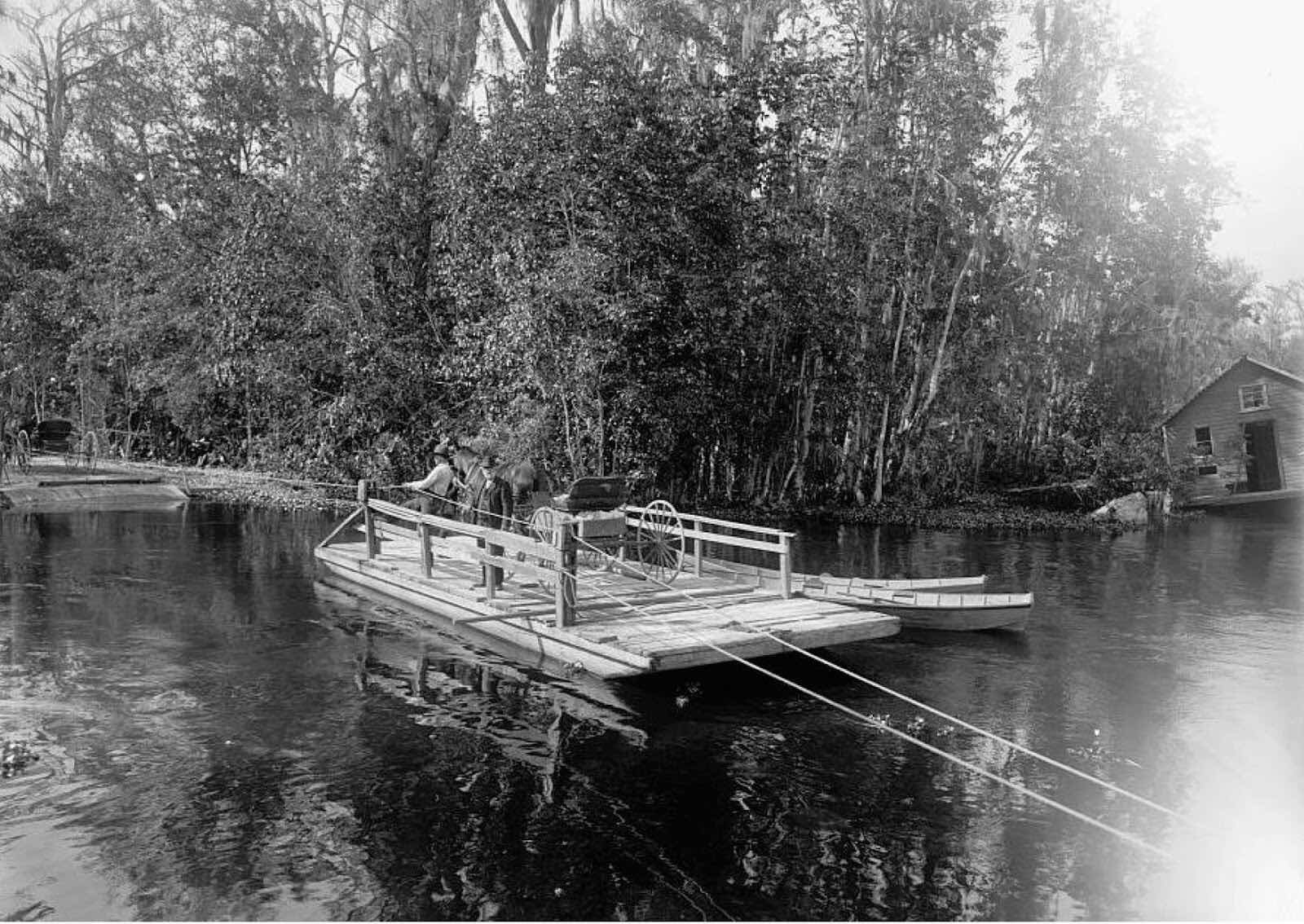
  Over the years, larger flatboats capable of ferrying a carriage, wagon, or freight came into use, and a pulley or winch system was used to move the boat against the current (photo below).  Costs rose accordingly, and in 1805 the toll for a carriage or team and wagon was $1.00 and a man and a horse 12.5 cents.  

 Cooper River ferry. (University of South Carolina collection).


Catawba River SC (photo from American Civil War Forum)


  Over time the location of a river crossing became a logical place to build a store ... a house ... an inn, and soon there would be a town, often named for the owner of the ferry business.  

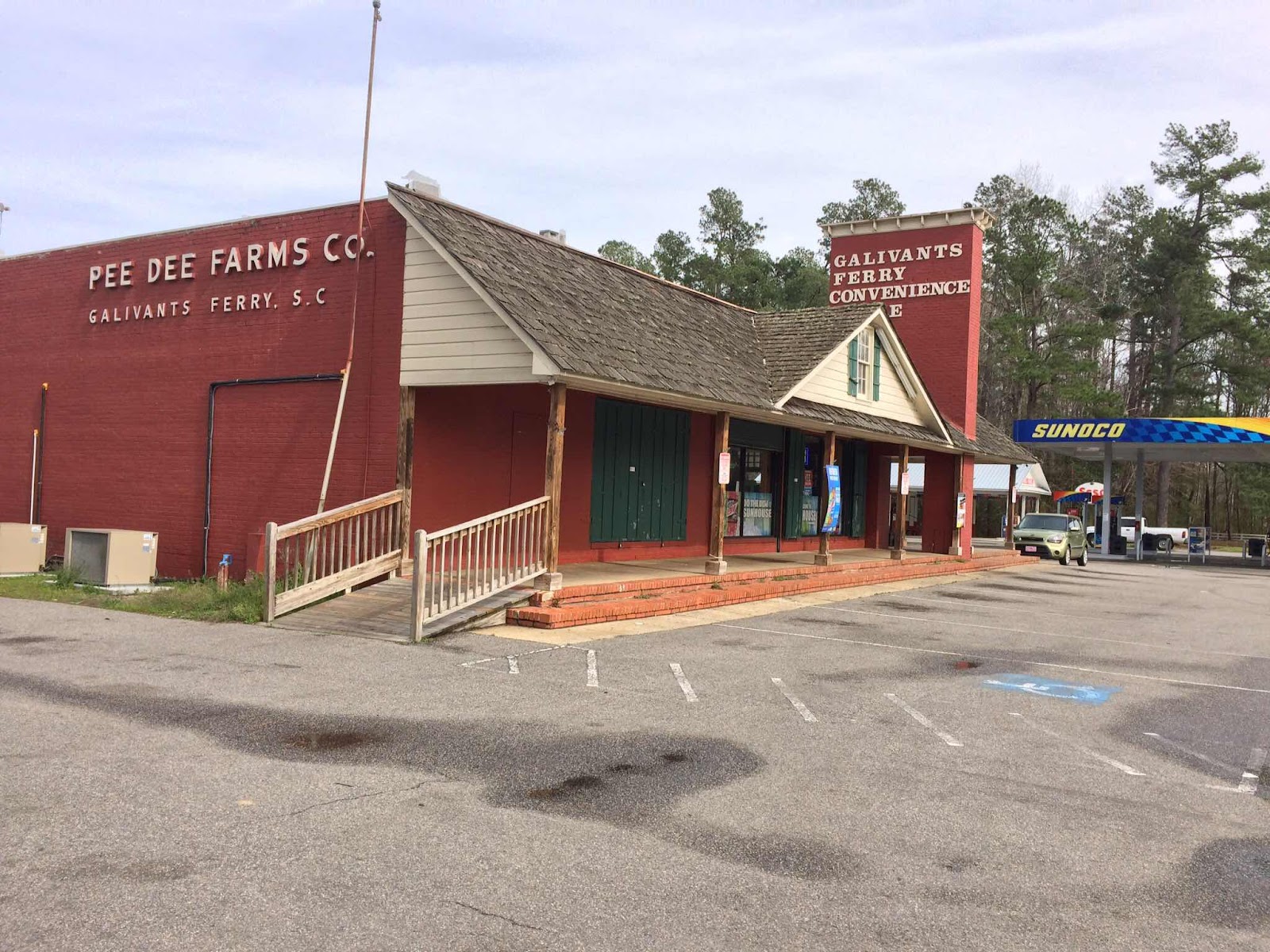
  One of those places is Gallivants Ferry, west of Aynor on Hwy 501. A Mr Gallevans was granted the license to run the ferry there in 1795.  A store followed and the crossing became known by his name — sort of, as Gallevans apparently became Gallivants at some point.


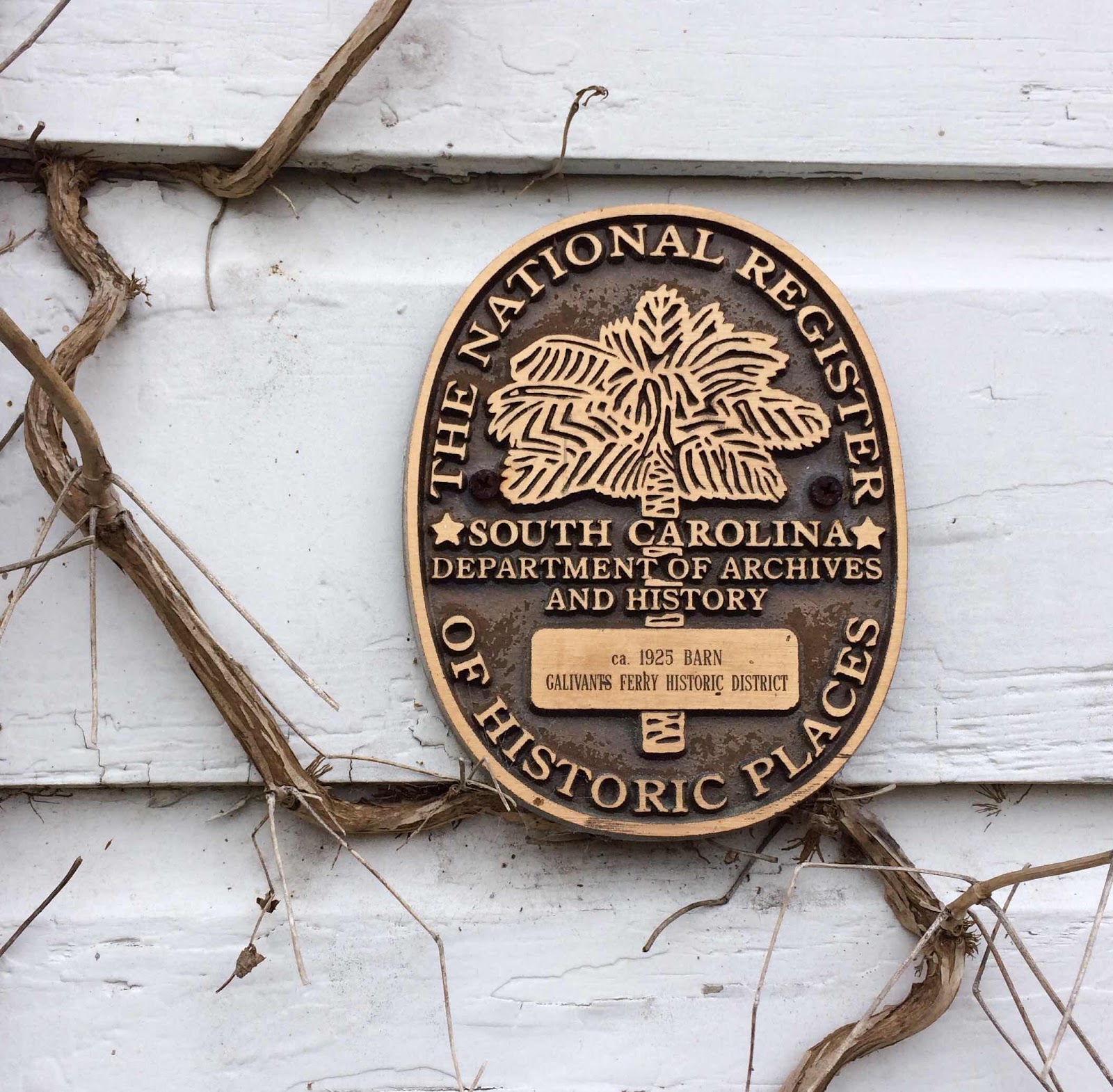
  The store is still there today, as are other buildings that used to make up a community.  Happily, every building left today is preserved on the National Register of Historic Places.  


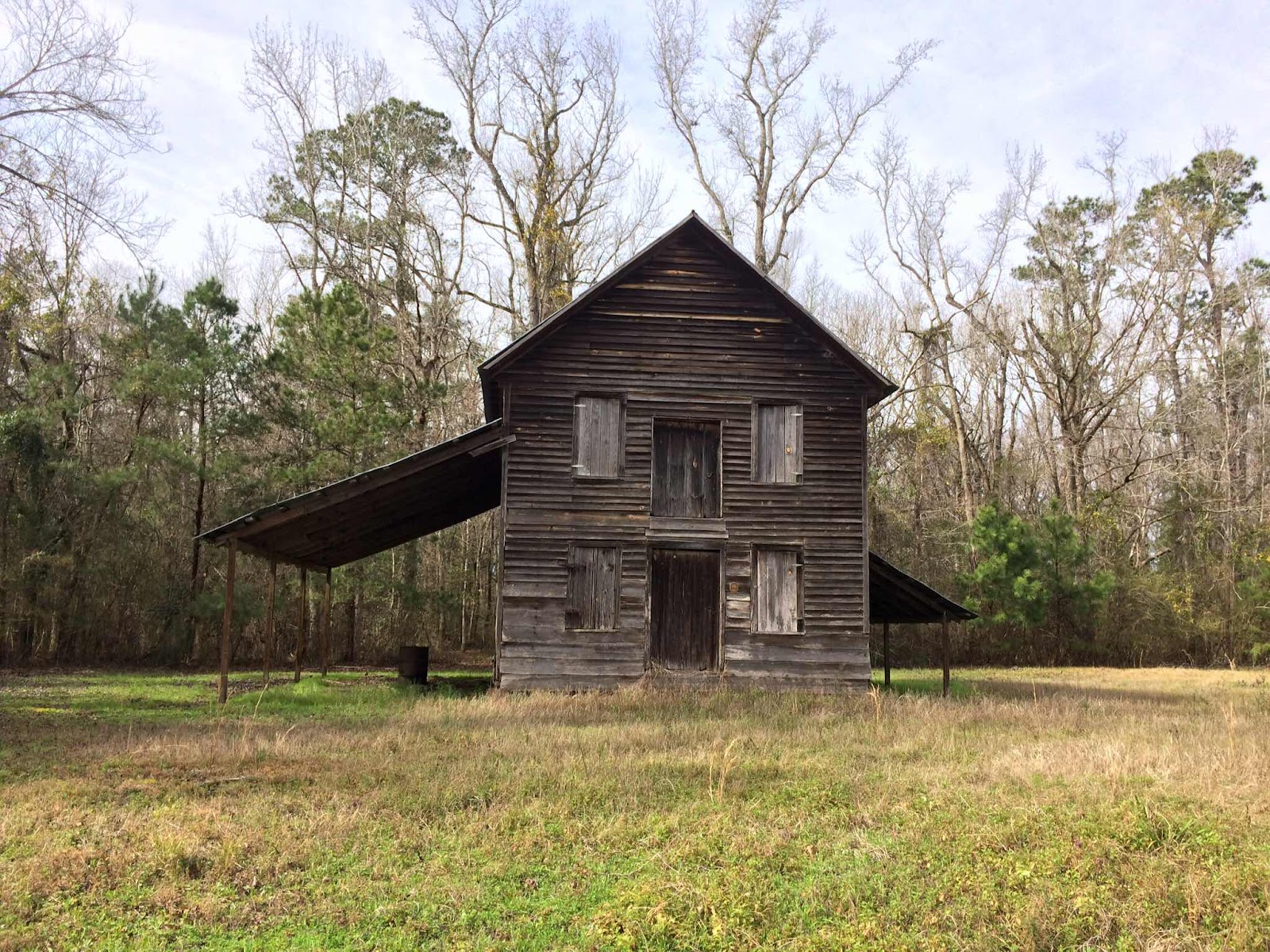
  When the cotton industry was demolished by the boll weevil, area farmers turned to tobacco for a cash crop. The variety grown here was “flue-cured tobacco,” which required a heating process in the barn before being sent to market.   The Pack House (left) was used to grade the cured tobacco and store it until it was taken to auction.


  Tobacco barns in the field were made of pine logs and equipped with brick furnaces to cure the tobacco.  Someone had to be at the barn around the clock to tend the wood furnace and control the temperature for a period of three days up to 10 weeks.  
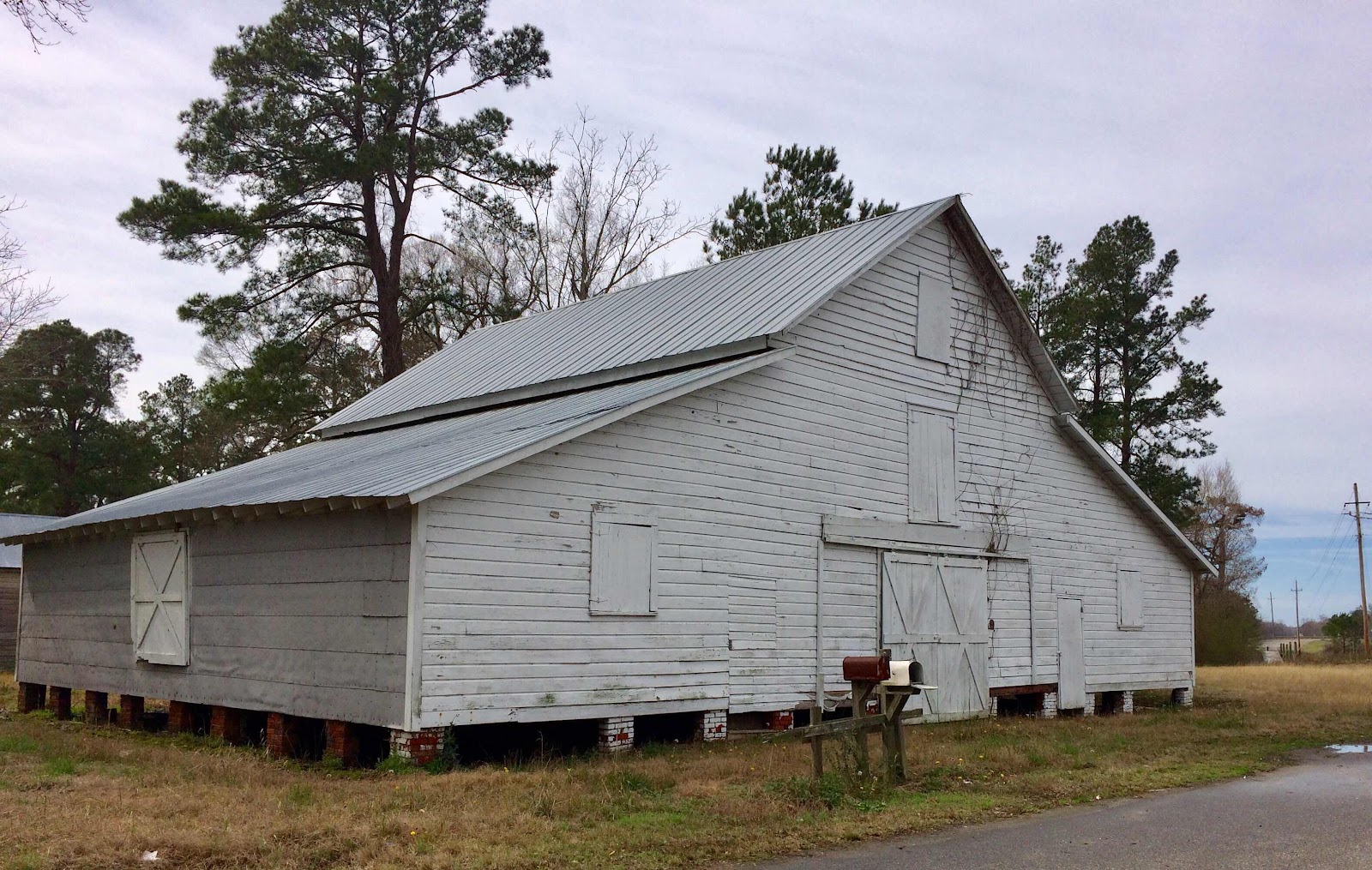
  Behind this large storage barn a small village of 3-room sharecroppers’ cabins still stands.  In the 1930s and ‘40s, 1200 to 1500 men, women, and children were part of the sharecropping workforce in this area.  When the tobacco was sold, they received half the profits for their work.
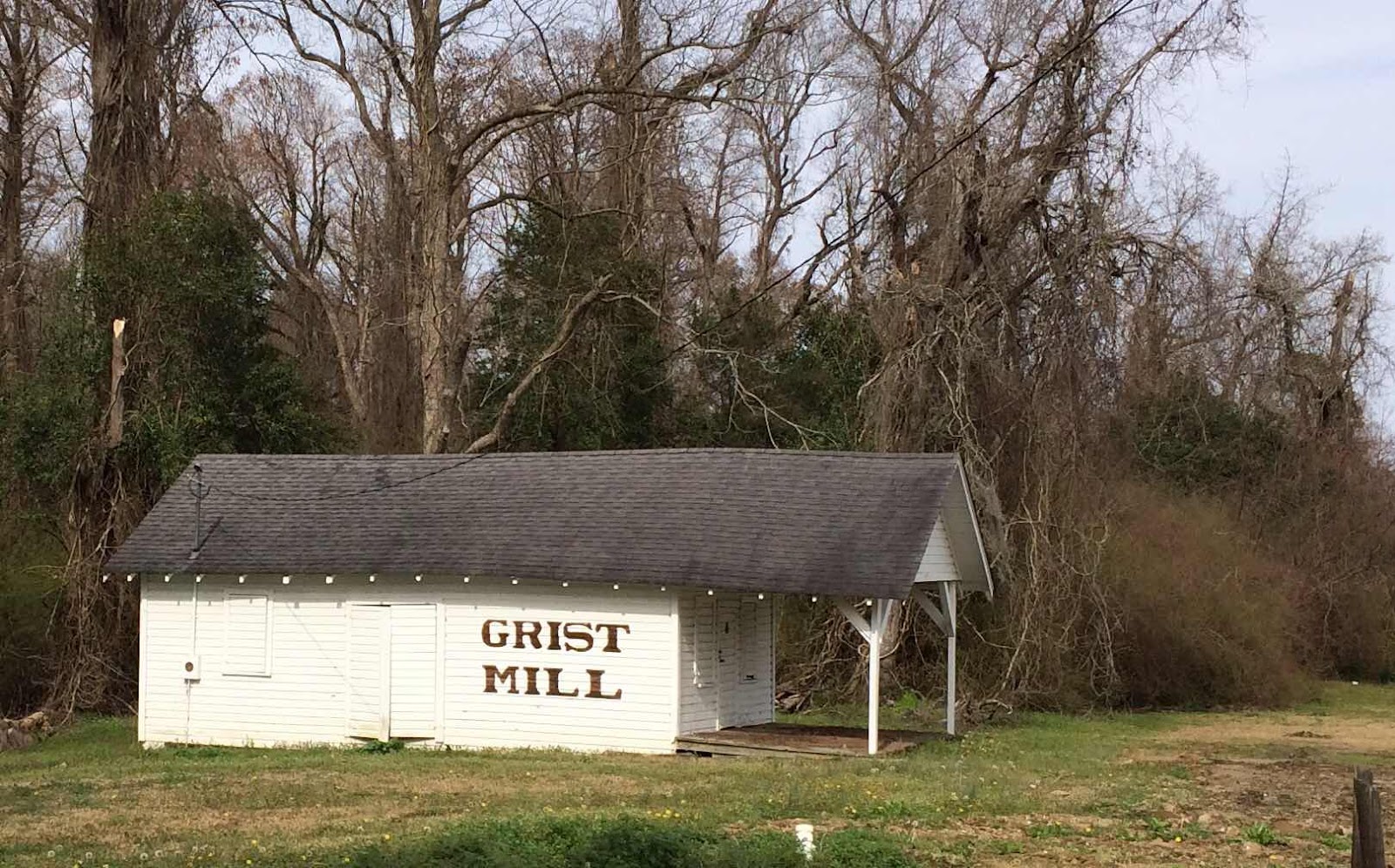


  Powered by mules, the grist mill employed granite rollers to crush grain to produce flour, meal and grits to feed the community and livestock. The miller kept a portion of the meal as payment for the service.

  There are quite a few more historic buildings to see in Gallivants Ferry, some of them still in private use.  

  It is an unusual historic site to visit as there are no commercial shops whatsoever selling stuff, no people around, no traffic, no explanatory signs.  You are happily left to explore with only the quiet flow of the river and your imagination to conjure up the stories the place has to tell. 


Wednesday, July 3, 2019

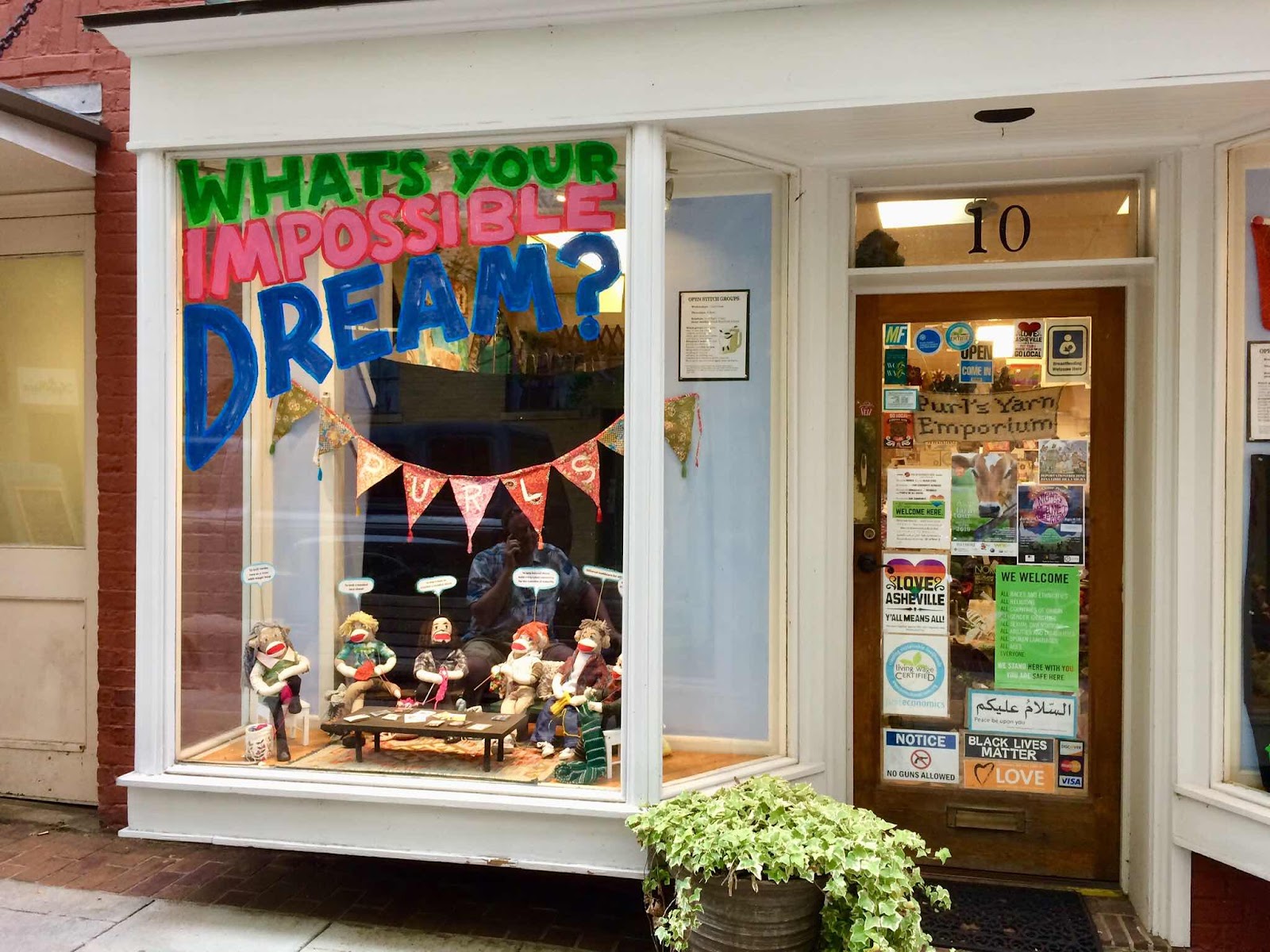
What’s Your Impossible Dream??

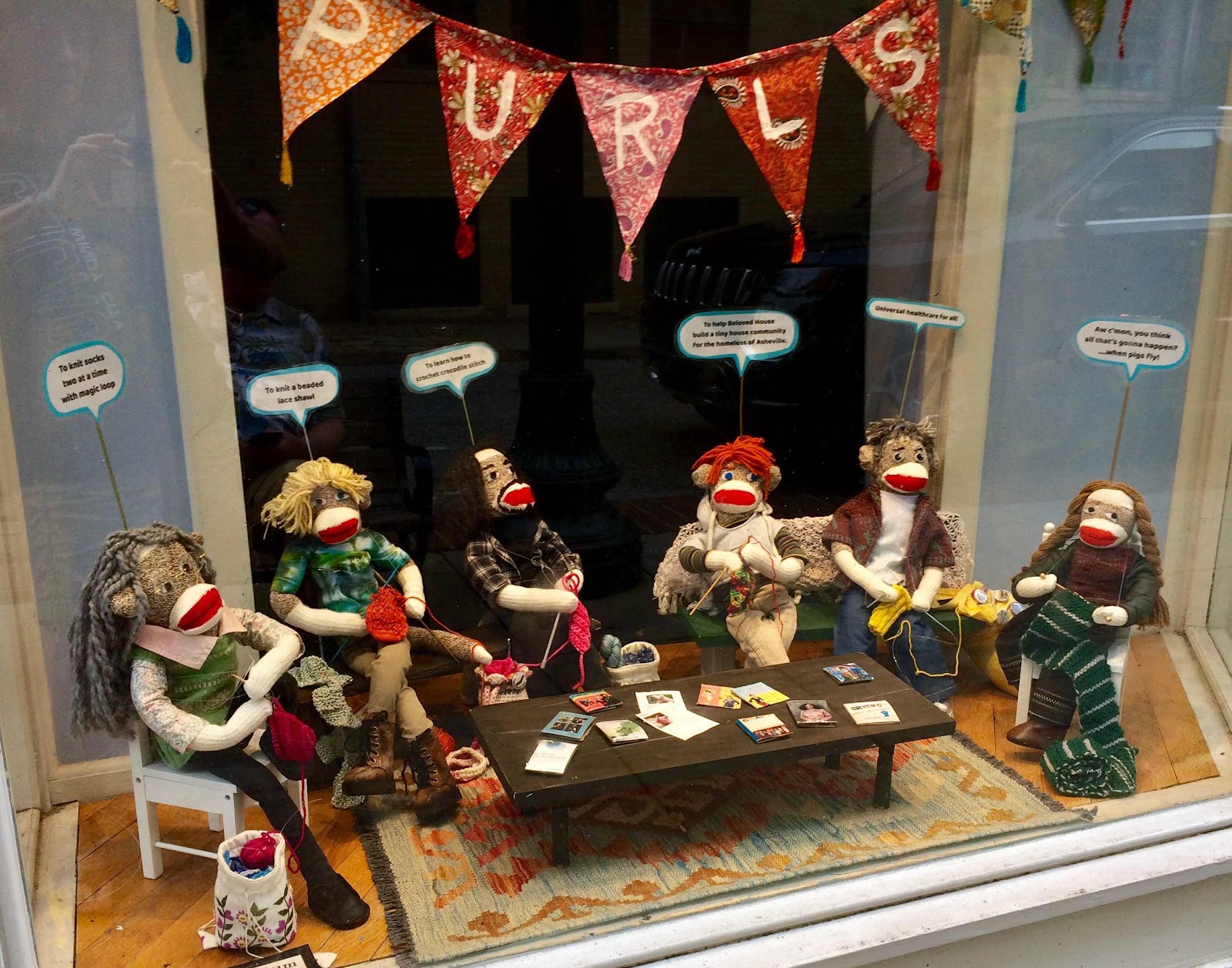
“Purl’s Yarn Emporium”, Wall Street, Asheville, NC


  Simple sock monkeys made of men’s red-heeled work socks were popular when I was little.  Everybody had a grandma who made them.  But look closely at the details of these. This window display takes sock monkeys to a whole new level!  
  
I had no idea such a humble toy would be controversial, but get this:  

  In 1953, Helen Cooke received the patent for sock monkeys and then sued a man named Stanley Levy because he was selling sock monkeys that were not the same design as hers.  He contacted the Nelson Knitting Company hoping that they would declare her patent invalid. One of the most important pieces of evidence the company uncovered was a doll made by a lady named Grace Wingent for her grandson in 1951. Helen caved and settled the case against Levy when she was shown the evidence against her.  She sold her sock monkey patent to the Nelson Knitting Company for $750.

“The Impossible Dream” from “Man of LaMancha”