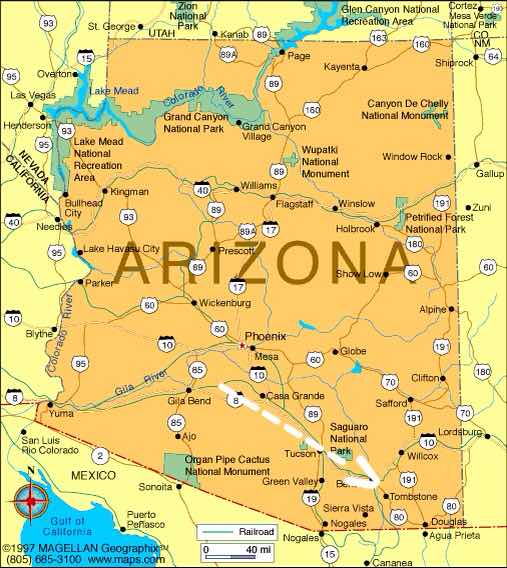
From Flagstaff we drove south to stay with The Writer's brother and sister-in-law in Tombstone, Arizona.
We probably shouldn't have been surprised by all the Border Patrol activity we encountered still 30 miles away from the Mexican border, but we were. Helicopters, patrol vehicles, and this sight on the quiet highway into town: a border patrol roadblock with dogs and plenty of well-armed agents.
One day Marty and Kari took us deep into the desert on the Ghost Town Trail Road.
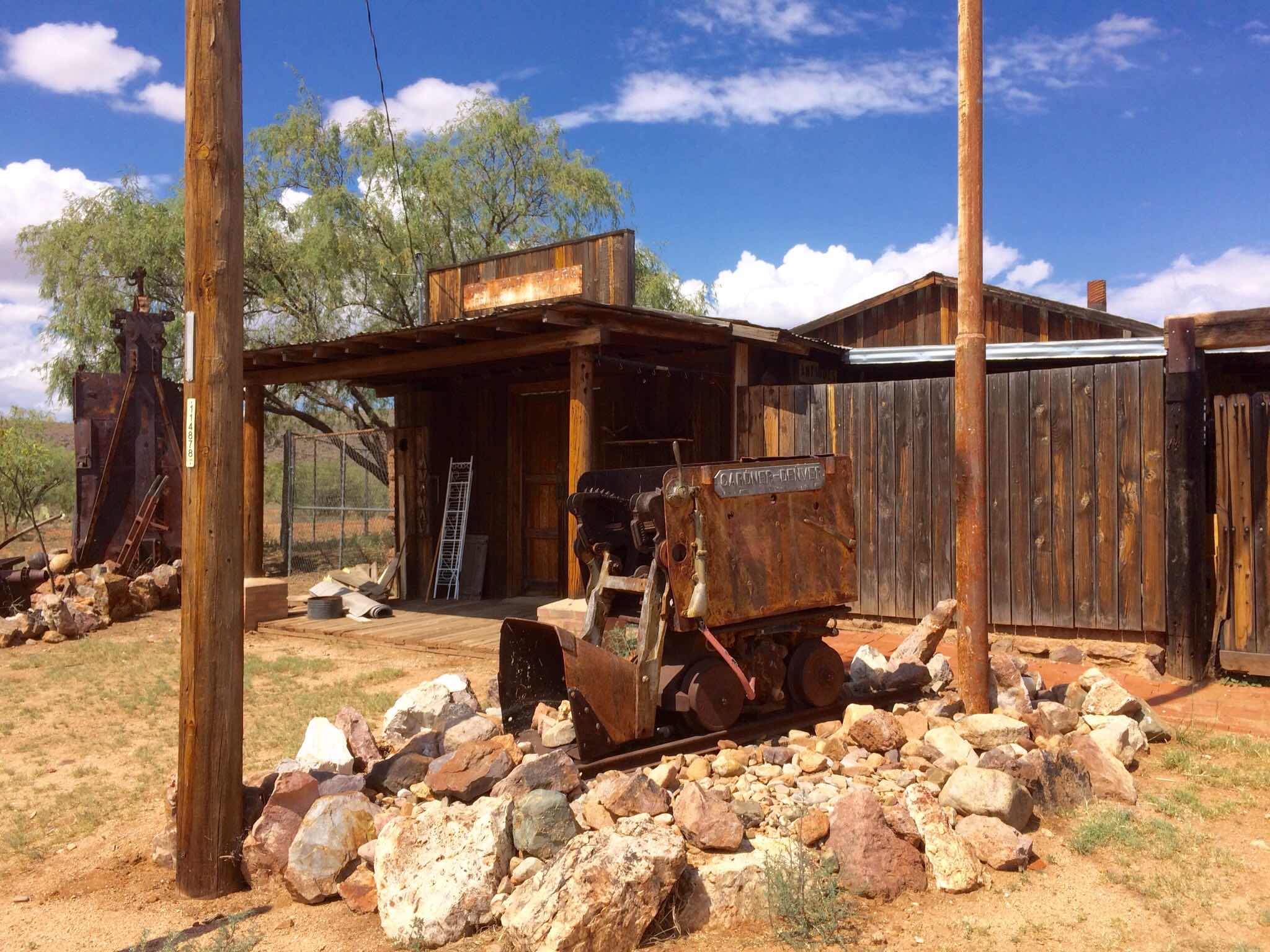
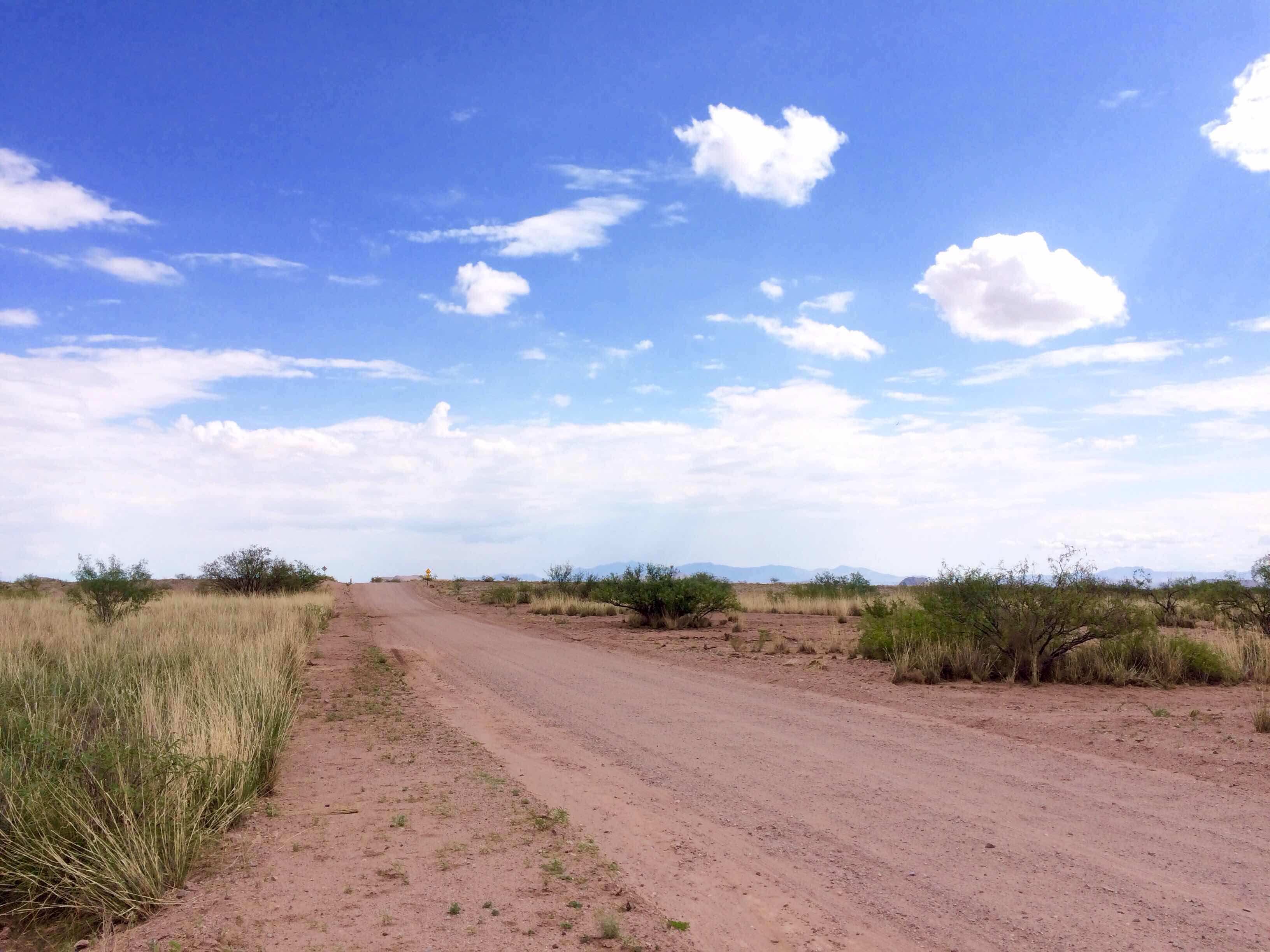 For miles along the desolate unpaved road, clusters of ruins lie here and there in the sand and desert scrub like this one at Elfrida. The ruins are the result of a mining boom at the turn of the 20th century and the bust that followed beginning after World War I.
While Native Americans prized turquoise they mined in the area, the white prospectors came for copper and gold.
In what was once called Elfrida, 6991 gold mines were registered over the years, with names like Little Luke, Mystery, Mountain Queen, Chance, and Great American. There is nothing more left of them than some rusted old iron and crumbling adobe brick foundations like this one.
Farther along is Pearce, another ghost town where gold was discovered in 1896. Four years later, the first copper mine opened in 1900. Pearce, with a peak population of 1500 people, earned itself quite a reputation as the wildest town in the West. It's hard to believe this as the current population is 15!
 Gold was discovered by a rancher, Jimmie Pearce, out riding the range. He picked up a rock, smashed it against a boulder, and EUREKA, there was gold inside! The news traveled quickly. People in Tombstone actually dismantled their homes and businesses, carried the pieces on wagons 30 miles over the Dragoon Mountains, and reassembled them in the area of Pearce's mine. Stores, a post office, school, jail, boarding house, and a dance hall were eventually built. Even a railroad!
The post office is one of the three buildings that still exists, although it was closed in 1967 and is now a private residence.
Across the road from the post office is the Soto Bros. & Renaud Store, built in 1896, one of two large mercantiles in Pearce. Although the exterior is kept up, it looks empty now.
The metal facade covers one of the largest adobe buildings in the county. To the side of the store is an old machinery repair shop with rusted mine machinery about.
The only other building in Pearce that still stands is one that probably saw a lot of use considering the history of the town: the jail. It was decked out for Independence Day when we were there.
The jail has two cells, adobe walls 10 inches thick and reinforced with rebar, iron doors, and six tiny high windows for ventilation. I don't see how the prisoners weren't cooked in there on a hot summer day like the one I stood outside in the relentless sun taking photos!
Apparently the jail wasn't all that successful in deterring crime in
Pearce. For awhile, to protect the wealth that was being brought out of Jimmie Pearce's Common-Wealth Mine, the gold had to be made into ingots too heavy to be transported by horseback. Otherwise, the local outlaw gang would snatch them and ride off with the gold before it made it safely to Cochise and onto the then-closest train.
After World War I copper prices fell and the copper mines closed. By the 1920s the country was in the throes of the Great Depression and the gold mines were petering out. By 1930 the last of the mines closed, the railroad rolled up its tracks (literally) and departed, and Pearce became another desert ghost town.
(Does the completion of this post make me a ghostwriter?)