Tuesday, April 19, 2016

How Does Your Garden Grow?

So far my garden attempt this year is going better than last summer, but it's not without its disasters.


The new bed (in the back) isn't fenced yet to keep the deer out, except for those tomato towers.


I planted the bed figuring we would have the fence done before the plants came up and the deer bothered it.

I didn't know the armadillo would climb up there and root it all up during the night, looking for worms and bugs in the nice loose dirt.

So I lost most of my specially ordered seeds to her. Including my precious purple carrot seeds!

I won't replant until we get the fence up. Hopefully soon.


The French beans have their first blossoms today. So exciting!

Home grown fresh beans taste so good. Why do they let them get so big before they pick them for the stores and farmers' markets?

Behind the beans are onions, spinach, and radishes which we have been eating already.


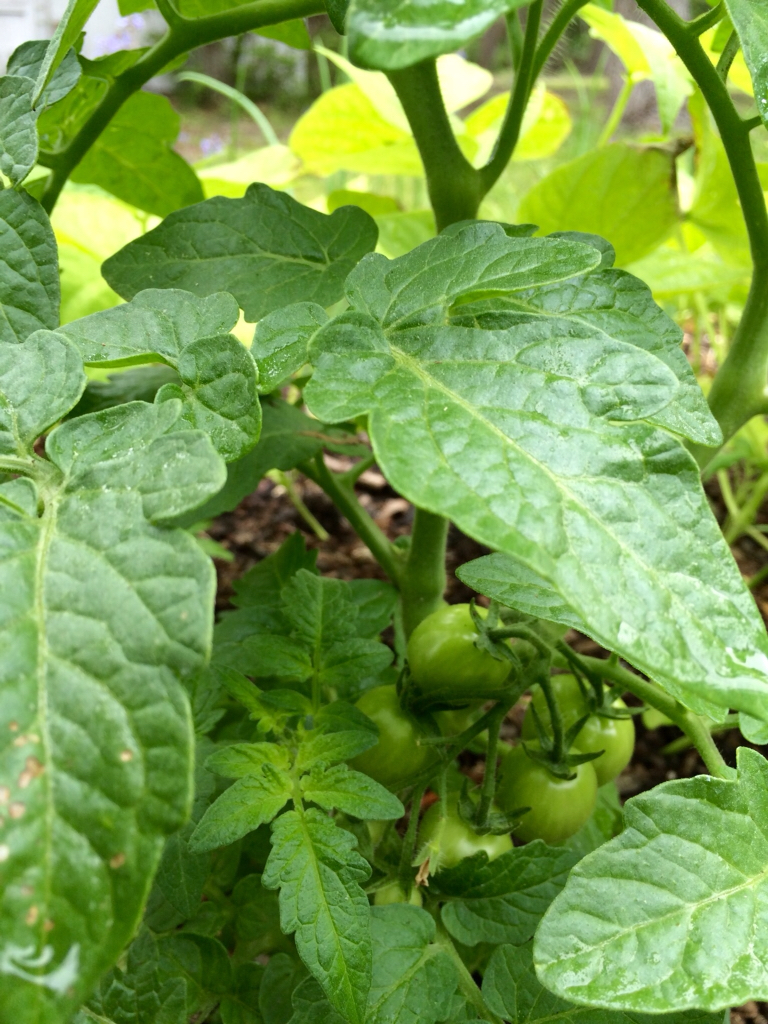
There are lots of these little guys on the tomato plants.


Until I moved to a rural, poor area of the South, I had plenty of places to buy good food, including reasonably priced natural food stores and co-ops, organic and local food available in several supermarkets, an Aldis, farmer's markets, farms where I could purchase meat, maple syrup, honey, and eggs within a few miles of my house, CSAs where I could subscribe and have a box of just-picked vegetables delivered every week in spring, summer and fall.

Living here, not so. To shop organic groceries involves 2 hours of driving. That market is a Whole Foods store on a popular tourist island and the prices reflect it. Mostly, they are outrageous!

Just to shop at an ordinary supermarket is a minimum hour and half of driving, and that also has inflated tourist prices. I can shop in a small store in the nearest small town ... if I want to eat pigs feet, snouts and ears, processed and canned foods, wilted imported produce, and packaged pies and cakes. And because it's a small store, its prices are also high.

The closest farmers' market where local farmers sell their food (rather than bringing in food from a wholesaler and reselling it) is 45 minutes away. We like it but it's expensive, too. Last week we bought a bunch of radishes local but not organic for $3. When we got home we realized there were only five radishes in the bunch so each radish cost 60 cents.

Holy buckets! They're radishes, not gold nuggets!

Anyway, because of where we live, our garden is even more important than mine was in Minnesota and I'm really hoping we can make our little raised beds and deck pots produce some good food for us this year.


Sunday, April 17, 2016

My Lowcountry Garden

The Writer is at a big golf tournament interviewing Important People this weekend, so I thought I would show you around here a bit.

I'm determined to have a better garden this year after my very disappointing one last year.

Because of the wildlife we share life with, I have to grow my flowers, citrus, and herbs in pots on the deck.

We have hungry and destructive squirrels, armadillos, raccoons, and deer that consider my plants gourmet snacks. Or teething biscuits.

Most of them don't come up on the deck. Yet.

The caged plants (far right and left) are lemon and lime trees.

The squirrels eat the leaves and buds if they can get at them.

That's why they are wrapped in chicken wire.


The Herbs


basil


parsley


sage


rosemary and thyme


catnip for Rosie


chives


lavender


dill


The Flowers


Can you believe these beauties

are just lowly petunias?


Salvia for the hummingbirds --

red

purple

pink


pansies

lantana

single and double impatiens


We cut pine poles yesterday to fence the second critter-proof raised bed.

I'll show you my thriving beds next time.

Meanwhile, Rosie says hello!


Tuesday, April 12, 2016

Coastal Georgia Botanical Gardens

The nearest big city and airport to us is Savannah, Georgia, about an hour away.

A few weeks ago we visited the Coastal Georgia Botanical Gardens there.


Most of the plantings are quite new and the new visitor center just opened last year.

The Georgia Colony, established by the British in 1733, was intended to be a great economic resource for England. There were high hopes for bringing great riches and wealth from the New World back to Britain.

To that end, Governor James Oglethorpe was instructed to open a 10-acre plot of land on the Savannah River and begin America's first agricultural experiment station with tropical plants from the East Indies, South America, and Europe.

Ten of the botanical garden's total 51 acres replicate some of those test plots with plants that would have been trialed there, including cotton which was to become so important to the economies of the southern colonies.

Medicinal and food crops that the first settlers to the Georgia colony were expected to produce were also trialed.

These included mulberry leaves for silkworms, grapes for wine, pomegranates, stone fruits, sesame, hops, and oranges.


For 60 years the US Department of Agriculture used the land for researching agricultural plants for the Southeast. The station closed in 1979 but the greenhouses and other buildings remain in use.

The entrance to the USDA was at the gate by this giant holly tree.


Lake
Water garden

Sago palm

We were too late for the camellias -- the largest collection of camellias outside of China -- but we have a schedule now and we'll be going back to see our favorite things in bloom.


Wednesday, April 6, 2016

Reptilia -- a morning wherein I execute a daring rescue

It was a gorgeous April morning at the Donnelly WMA .

I got out of the car to take a photo of the egrets

And saw this in the water

And then on the bank a large chicken turtle

stranded upside down by the receding tide and unable to right himself.

Without a care as to whether I would be able to pull myself back up the steep bank,

l scrambled down to rescue him.

Bravely ignoring his hissing, I flipped him over, and off he went.

They're named chicken turtles not because of a cowardly nature or a resemblance to a chicken

but because their meat tastes like chicken.

~~~~~~~~~~~~~

Meanwhile the alligators began coming out of the mud for some spring sunshine.


Lots of singles and a few

pairs and then ...


See those logs floating on the left? They're not logs, they're gators!

We counted fourteen on the little sandy beach and in the water at this spot.


See? Gators, not logs.


Wildflowers on the roadside in Yemassee, SC


Monday, April 4, 2016

Wisteria Hysteria


Wisteria

It's everywhere!

Up and down the roads
Its heavy perfume wafts and floats
Enticing travelers.

Masses of blooms cascading from treetops to ground,

Delicately covering over the truths winter exposed.
Purple haze

of abundance and beauty

shouting, "Spring!"


Saturday, April 2, 2016

Market Day

The rain cleared just in time for the Port Royal Farmers' Market to open this morning.


If you didn't have time for breakfast, you could get it made fresh while you waited.


Healthy eggs (from happy hens), smothered with cheese, to go with homemade bagels. Very tempting.

The hens are happy hens because they are pastured all day, every day, where they dine on grubs, greens, and grain.

It says so right on the sign.


The bird rehabber was back

educating the crowd along with a

very engaging young man with a

barred owl.


I think the

turkey vulture

had his eye on someone's breakfast.


Here is what we brought home: eggs, radishes, kale, cabbage, brocolli, and mixed lettuces.

The purple radishes are really spicy!